ラクロス部の皆さん
私がラクロスに惹かれたのは、高校時代にさかのぼります。当時、イギリスの植民地だった香港で育った私の周りでは、ホッケーが人気のあるスポーツの一つでした。そこにラクロスが登場し、友人の何人かはラクロスに転向しました。運動が得意だったわけでもない私は、ただ、ラクロスを「かっこいいスポーツだな」と思って見ていました。スピードがあり、技術があり、そして少し珍しい感じもありました。
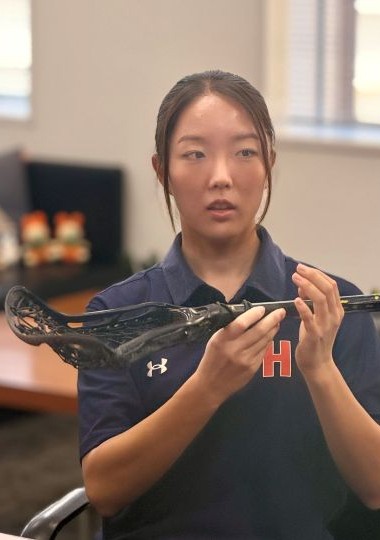
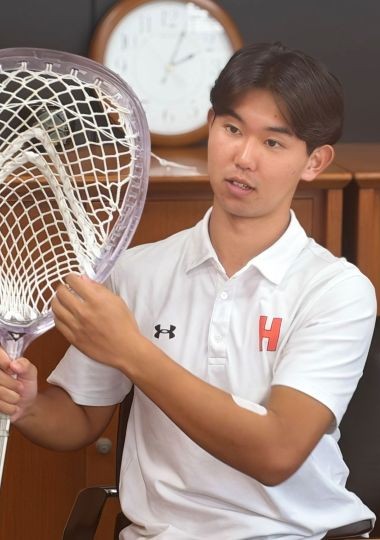
ですから、今日、本学ラクロス部の主将や次期主将の皆さんに会えたのは、とても嬉しいことでした。しかも、そのうちの一人はU-20日本代表としてプレーした経験があり、さらに聞いてみると、香港代表とも対戦したことがあるとのことでした。
学生たちによると、日本ではラクロスは主に大学で始めるスポーツで、それ自体が魅力の一つだそうです。多くの選手がほぼ同じ時期にスタートするので、ある意味では同じような地点から始められ、努力すればその分、自分が上達していくのを実感できると言います。一方で、高校時代に経験してきた野球、バレーボール、サッカー、ソフトテニスなども、それぞれラクロスに生かされているそうです。ボールの軌道を読む感覚、クロスを扱う技術、走る力や動き方など、それぞれの経験が違った強みにつながっています。
ラクロスの試合を見たことがある人なら、そのスピード感がよく分かると思います。その速さの中では、一人ひとりの動きの連動と、チームとしての連携、そして瞬時の判断が求められます。だからこそ、選手同士のコミュニケーションがとても重要になります。女子チームでは学年を越えたグループをつくり、男子チームでは、同学年の数人に他学年の学生も加えた「ファミリー」をつくっているそうです。こうした仕組みは、コミュニケーションを取りやすくするだけでなく、チームへの帰属意識を高めることにもつながっているのではないかと思います。チームスポーツでは、とても大切なことです。
体育会での活動を通じて、向上心、最後までやり切る力、精神的な強さ、そして時間を守るといった規律も身についていることが伝わってきました。こうした力は、将来どのような仕事に就いても生かされるものだと思います。でも、学生たちがラクロスを続けているのは、そうした実利的な理由からではありません。ラクロスそのものを楽しんでいることが、何より大きいのだと思います。うまくパスがつながったとき、ゴールが決まったとき、あるプレーが思い通りに決まったときの達成感。その喜びが、学生たちを動かしているのだと思いました。
これまで、競技や勝負の世界に真剣に向き合っている人たちと話す中で、何度も聞いてきたことがあります。広い意味での「アスリート」と言ってよいと思いますが、共通しているのは、「正解は一つではない」ということです。今回も、男子ラクロス部の主将が、その点をはっきり話してくれました。努力を続け、考え続け、探り続けながら、自分なりの答えを見つけていく。
それは、教育の根幹にも通じることではないでしょうか。



Members of the Lacrosse Team
My fascination with lacrosse goes back to high school. Growing up in the then British colony of Hong Kong, hockey was a popular sport among some of my friends. Then lacrosse appeared, and a few of them switched over. Hardly an athlete myself, I simply thought the sport looked cool — fast, skillful, and a little exotic.
So imagine my excitement at meeting the captains and captains-elect of our lacrosse teams today — not least because one of them had played for Japan’s U-20 national team and, as I learned, had even played against Hong Kong!
The students told me that in Japan, lacrosse is still largely a university sport, and that in itself seems to be part of its appeal. In a sense, it offers a relatively level playing field, because most players begin at around the same time. If you work at it, you can see yourself improve. At the same time, the students’ earlier experience in baseball, volleyball, soccer, and soft tennis gave them different advantages when they took up lacrosse: a feel for the trajectory of the ball, skillful handling of the stick, speed and movement on the field, and so on.
Anyone who has watched a lacrosse game can appreciate its speed. That speed demands coordination — within the movements of each player, and among players as a team — as well as the ability to make quick decisions. Communication, then, is essential. To encourage better communication, the women’s team forms groups that cut across academic years, while the men’s team creates “families” made up of several students from the same year together with students from other years. I imagine this also strengthens their sense of belonging to the team, something that matters greatly in any team sport.
Being part of varsity sports has clearly nurtured qualities such as the drive to improve, the ability to see things through, mental strength, and the discipline to be punctual. These are all qualities that employers in many different fields would value. But from what I could tell, the students do not play lacrosse for those practical gains. They play because they enjoy the game itself, and because of the satisfaction that comes from a well-executed pass, a goal, or a play that comes together exactly as intended.
In all my conversations with people who devote themselves seriously to a pursuit — athletes in the broadest sense — I have heard a similar message: there is no single correct answer. This time, the captain of the men’s team put it very clearly. You have to keep putting in the effort, keep exploring, and find your own answer.
Isn’t that also at the heart of education?