

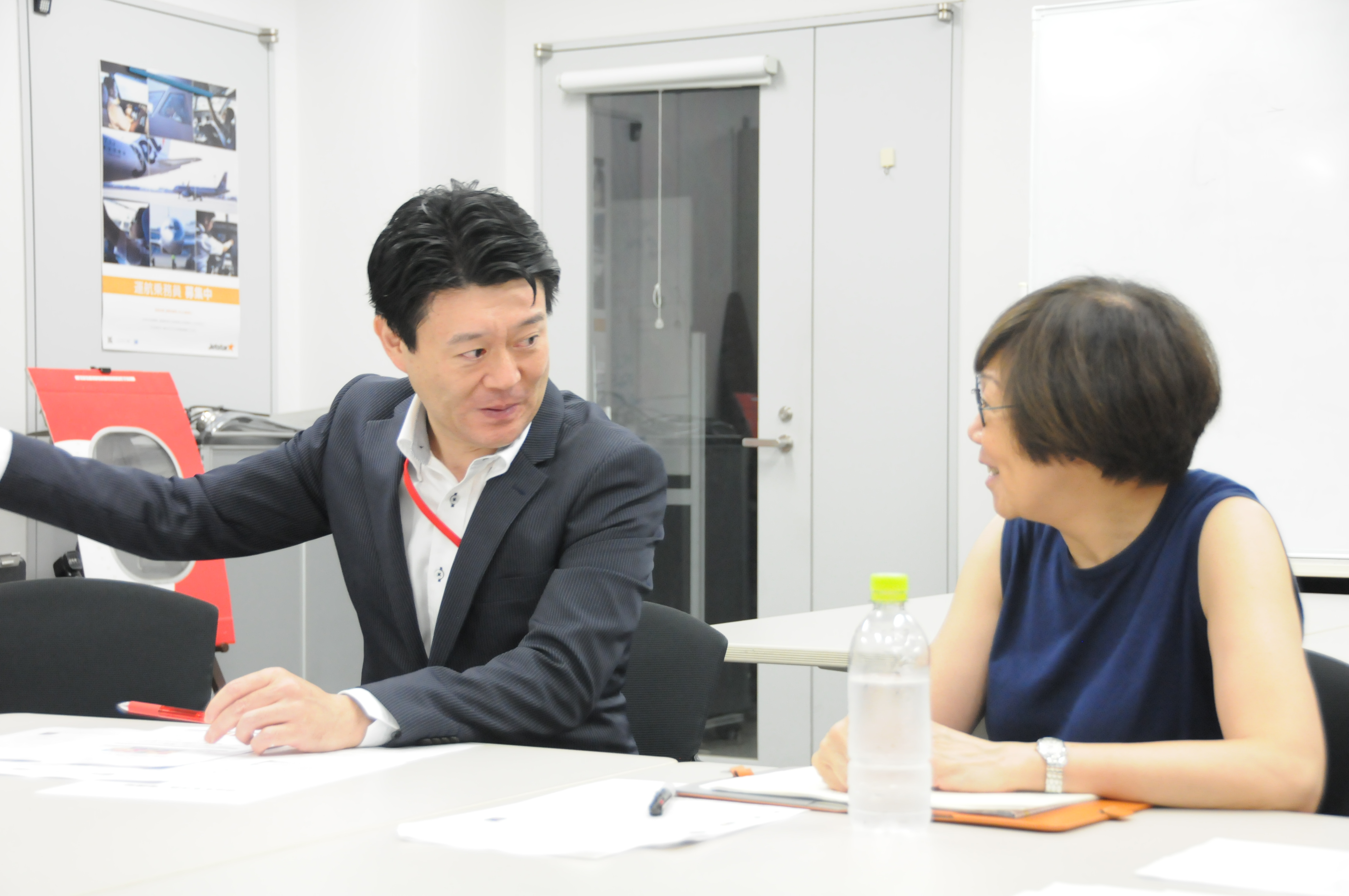
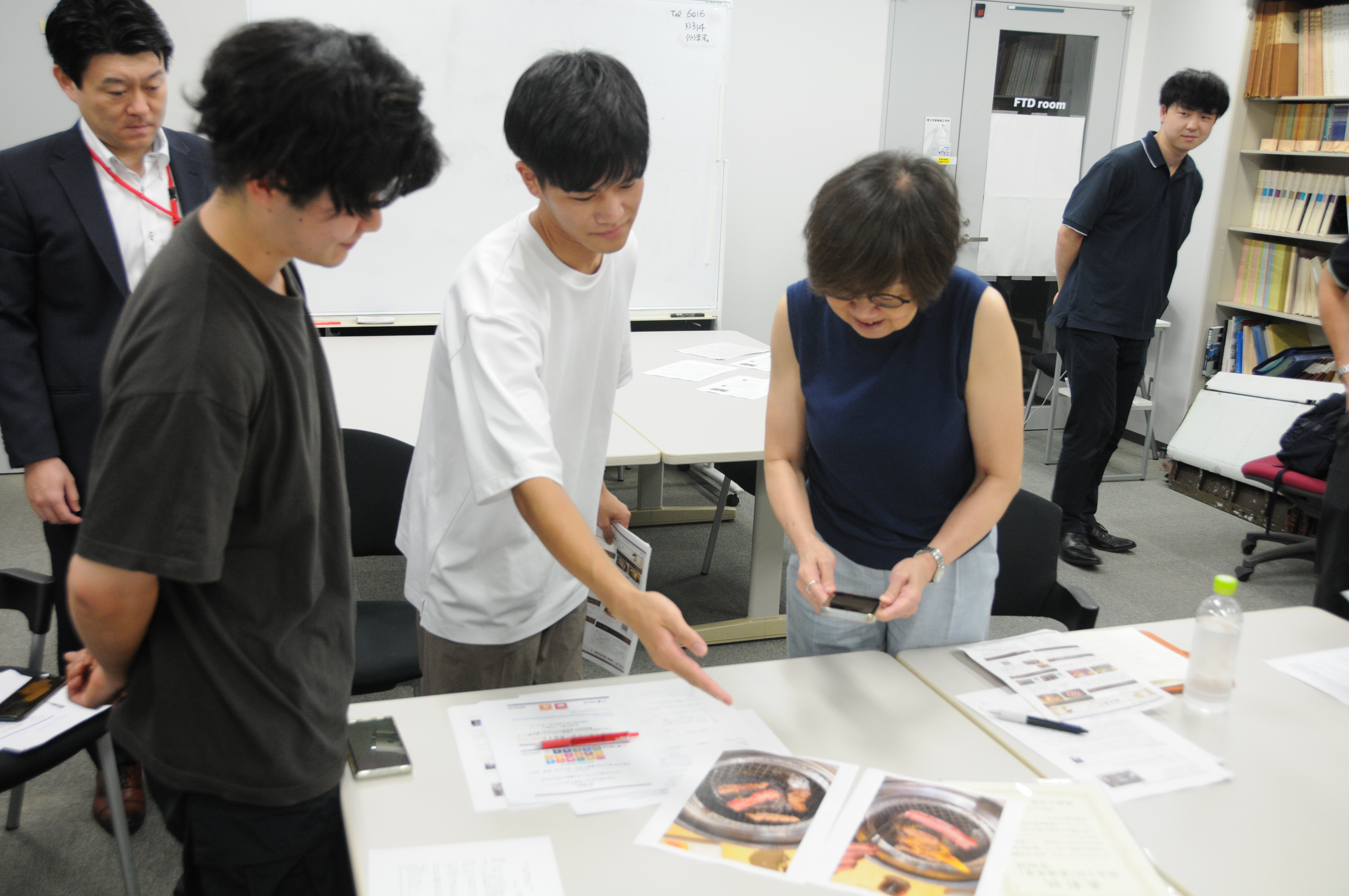
この「出会いメモ」は「ブランディング推進チーム・総長研究室訪問企画」として、Diana Khor総長が理工学部機械工学科 吉田 一朗 教授および研究室学生4名(大学院含む)にインタビューを行ったものです。
本学は法政大学憲章にて「真に自由な思考と行動を貫きとおす自立した市民の輩出」を社会に約束しています。教育現場ではどのようにその約束が果たされているのでしょうか。この企画では、総長が先生やゼミ生を訪問し、教育への思いやゼミ運営の工夫などを直接伺い、その魅力を広く発信していきます。
関わること――理工学部 吉田一朗研究室
吉田先生の研究室を後にして、いちばん心に残った言葉は「関わること」でした。吉田先生だけでなく、学部生や大学院生からも何度も聞いた言葉です。実際、それが吉田先生のもとで学ぶことを選んだ理由の一つだったという学生もいました。
ここでいう「関わること」は、先生と学生との関係だけではありません。それぞれが自分の研究に取り組む中で、学生同士が関わることも含まれています。
機械工学というと、機械の設計や製作を思い浮かべるかもしれませんが、実際にはとても幅広い学問です。学生が自分の関心に応じて研究テーマを選べるということは、この分野の広さだけでなく、吉田先生自身の幅広さも示しているように思います。
一方で、吉田先生は、学生には「自由」があるけれど、何をしてもよいというわけではない、と話していました。自分の研究テーマとは一見関係のないようなことにも取り組ませるそうです。そうした経験を通して、新たな研究関心を見つけることもある。やってみることの中から、次の問いが生まれるのだと思います。
これは、吉田先生と学生たちの法政大学憲章「自由を生き抜く実践知」の捉え方にもつながっています。
ここでいう「自由」は、好きなことを好きなようにするという意味ではありません。自分の研究や仕事がどのような影響をもたらすのかを深く考えること。そして、仲間との連帯と個人の尊重をどう両立するのか、よりよいコミュニティや社会をどうつくっていくのかを考えること。そうした規律を伴う自由です。こうした考え方は、本学憲章の基本的な価値や理念そのものであり、吉田研究室では、それをそのまま受け入れるのではなく、批判的に考えながら実践されています。
吉田先生は、一見するとごく「実用的」な成果を例に説明してくれました。生産工程や設計を改善することで、製品をより安くつくることができる。そうすれば、その製品を経済的に余裕のある人だけではなく、より多くの人に届けることができます。一見、生産技術的な改善にすぎないように見えることも、実は多くの人の生活をより豊かにすることにつながる。そこにも、本学憲章の考え方が表れているのだと思います。
吉田先生と学生たちが大学憲章をこのように捉えていることを考えると、吉田先生が授業の中で哲学、つまり根本的な問いについて話すのも、ごく自然なことのように思えます。知識や研究にどう向き合うのか。考える力、調べる力、判断する力、問題を解決する力。そして、自分自身を評価する力。専門知識を身につけることと同じくらい、研究に向き合う姿勢や、人とどう関わるかが大切なのだと思います。
特に印象に残ったのは、「和」を大切にするということは、迎合をよしとすることではなく、「必ず対話する」ことだという吉田先生の言葉でした。それはまさに、吉田研究室で日々実践されていることではないでしょうか。関わること。
そう考えると、吉田先生が進路を決める際に、人文・社会科学の分野も考えていたというのも不思議ではありません。人間を知りたいという思いが、その背景にあったそうです。最近は「文理融合」という言葉をよく耳にしますが、そこには、何か新しいことを始めるような響きもあります。しかし、そもそも学問の歴史の中で、人文・社会科学と自然科学が分かれていなければ、「融合」する必要もなかったはずです。
吉田先生や学生たちとの話を通して、改めて、哲学はあらゆる学問の根底にあるのだと感じました。
Engaging with Others—Professor Ichiro Yoshida’s Laboratory, Faculty of Science and Engineering
The phrase that stayed with me after leaving Professor Yoshida’s laboratory was “engaging with others.” It was repeated not only by Professor Yoshida himself, but also by his undergraduate and graduate students. Indeed, it seemed to be one of the reasons some students had chosen to study with him. This idea of engagement applies both to the relationship between professor and students and to the relationships among students themselves as they work on their respective research projects.
Mechanical engineering may bring to mind the design and production of machines, but it is in fact a remarkably broad field. Allowing students to choose research topics based on what interests them speaks not only to the breadth of the discipline, but also to Professor Yoshida’s own versatility.
At the same time, Professor Yoshida was quick to point out that while students have “freedom,” they do not have free rein. He also asks them to take on things that may at first seem unrelated to their particular research topics. Through doing so, he believes, students may discover new research interests. Sometimes, discovery comes through the doing itself.
This resonates with the way Professor Yoshida and his students interpret the Hosei University Charter, Practical Wisdom for Freedom. “Freedom,” in their understanding, does not mean being free to do whatever one likes. It is a kind of disciplined freedom—one that requires serious consideration of the impact of one’s work, and that invites reflection on the tension between camaraderie and respect for the individual, as well as on how we might build better communities and contribute to a better society. These ideas lie at the heart of our University Charter and are put into practice—critically, rather than unthinkingly—in Professor Yoshida’s laboratory.
Professor Yoshida illustrated the point with what might at first seem like a purely practical outcome. Improving a production process or a design may make a product less expensive. That, in turn, can make something useful available to more people, rather than limiting access to those with greater economic means. Even a seemingly technical improvement can therefore connect directly to one of the core ideas in our Charter.
Given the way Professor Yoshida and his students read the University Charter, it seems almost natural that he would also talk about philosophy—about fundamental ideas—in his classes. He speaks about how we approach knowledge and research, and about the importance of basic capacities such as thinking, investigating, judging, and solving problems. On top of that comes self-evaluation. The disposition one brings to research, and to relationships with others, is just as important as the acquisition of specialized knowledge.
One point he raised stayed with me in particular. He emphasized that the value of harmony does not lie in simply going along with others, but in the importance of always engaging in dialogue. That, it seemed to me, is precisely what is practiced in Professor Yoshida’s laboratory: engaging with others.
It is perhaps not surprising, then, that Professor Yoshida had also considered studying the humanities and social sciences when choosing his own field. Part of what interested him, he explained, was a desire to understand people.
Much of the recent discussion about integrating the humanities and sciences carries the implication that this is something new. But if academic disciplines had not historically been separated in the first place, there would be no need to “bring them together.”
My conversation with Professor Yoshida and his students reminded me once again that philosophy, in a very fundamental sense, lies at the foundation of all fields of knowledge.

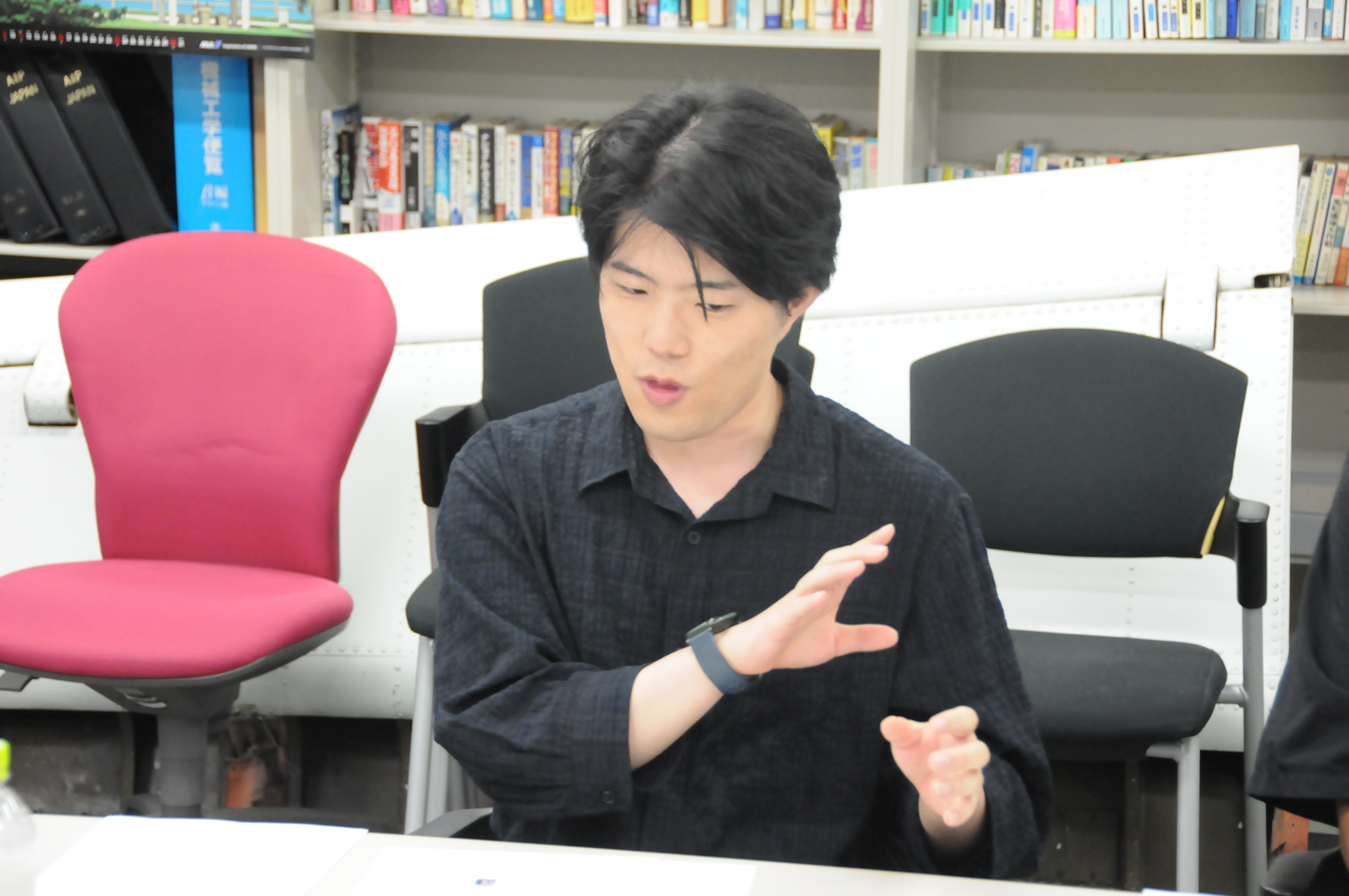
法政大学 理工学部 機械工学科学科 教授 吉田 一朗
1976年東京都生まれ。2000年明治大学理工学部機械情報工学科卒業、2002年同大学大学院理工学研究科博士前期課程修了。2003年より明治大学理工学部助手、2006年より長岡技術科学大学工学部にてJST研究員を務め、2008年明治大学より博士(工学)の学位を授与。同年、株式会社小坂研究所に入社し、2016年まで精密機器事業部開発企画チーム課長として精密測定機の開発と事業企画に従事。2016年より法政大学理工学部機械工学科専任講師、2017年航空操縦学専修兼務、2018年准教授、2019年より教授。2012年より中京大学人工知能高等研究所 特任研究員、2015年より上智大学 理工学部 共同研究員、2019年より東京大学生産技術研究所リサーチフェローを兼務。
学協会等の活動では、精密工学会理事、日本機械学会機素潤滑設計部門幹事、ISO/TC213国際エキスパート、法政大学理系同窓会事務局長等を歴任。研究は計測工学、AI、データサイエンス、精密工学、トライボロジー、表面粗さ、ロボティクス、ゲーミフィケーションを対象とし、2019年日本設計工学会論文賞、2022・2023年度に精密工学会誌インパクト賞の他、複数を受賞。
教育面では、2024年度法政大学「学生が選ぶベストティーチャー賞」を受賞。学生のキャリア教育・支援では、電気電子工学科の伊藤一之教授と二人で現在の形式のキャリア相談会をはじめて企画・実施し、参加の方々から好評を得て、現在は年間4回開催している。
(写真は法政大学に着任した年度、はじめての研究室指導学生たちと卒業式で撮影したもの)