卒業生教員の皆さん
「DEIを推進している大学を卒業したということに自信を持って、これから教育に携わっていきたい。」
正確な言葉は覚えていないかもしれませんが、メッセージははっきりと伝わってきました。そう話してくれたのは、本学を卒業したばかりのルーキーの先生です。
大学を代表する立場として、そして長年DEIの推進に関わってきた者として、この言葉が私にとってどれほど励みになったか、おそらくこのルーキーの先生自身は十分にはわかっていないと思います。
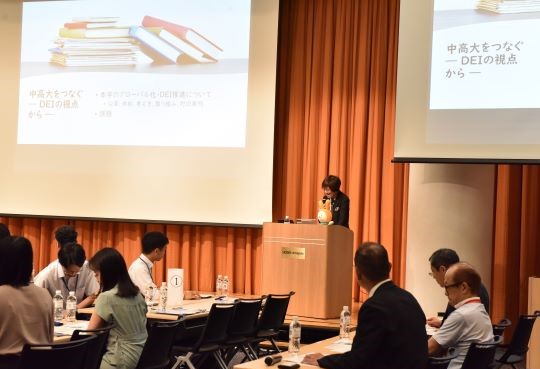
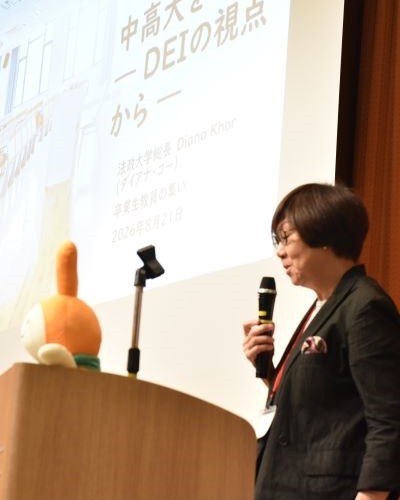
今回、私は「中高大をつなぐ――DEIの視点から」というタイトルでお話しする機会をいただきました。昨年度の教職課程センターシンポジウムでは「日本語を母語としない子どもの支援」がテーマとなり、その背景には、今や外国にルーツを持つ子どもに限らず、多様な背景を持つ生徒が、さまざまな教育段階で学んでいるという現状があります。日本語学習の支援や本学のDEIセンターの取り組みにも触れてはどうかというご提案をいただき、今回はもう少し広く、本学のDEI推進について、体制、方針、取り組み、そして課題を中心にお話ししました。
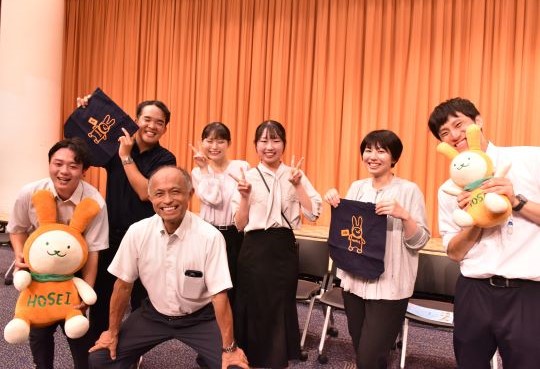
その後の懇親会では、何人かの新米の先生たちとお話しすることができました。「もう、大変です」と言いながら、みなさん笑顔です。そして口をそろえるように、「でも、生徒がかわいいんです」と。中学1年生に英語をどう教えるか。授業そのものだけでなく、教室の外でもいろいろなことが起きること。先生という仕事の忙しさ。教えるという仕事のさまざまな面について、たくさん話を聞きました。
まだ教師として手探りで進んでいる様子も伝わってきました。日々の仕事の忙しさにかなり苦労しながらも、一回一回の授業をもっと良くしたい、生徒にもっと多くのことをしてあげたい、という思いがある。一方で、生徒が気軽に相談できる存在でありながら、友だちではなく教師、教育者として客観的に物事を見て、必要なことを伝えるためには、どのくらいの距離を保てばよいのか。その距離感にも悩んでいるようでした。話を聞きながら、自分が新米教師だったころのことを思い出しました。
一方、経験を重ねた先生方とのお話からは、教育の中でDEIを実現していくうえでの核心的な課題も垣間見ることができました。小学校、中学校、高校と、さまざまな段階で外国にルーツを持つ子どもが増えています。一人ひとりの個性や文化的背景を大切にしながら、すべての子どもが将来それぞれの場所で力を発揮していくために、どのような力や姿勢を育てていけばよいのか。
これまで当たり前だと思われてきたことが、改めて問い直される場面もあります。ある先生からは、白い帽子をかぶることを嫌がる子どもの話を聞きました。文化によっては、白という色に縁起の悪い意味があるのかもしれない。日本の学校では一般に想定されてこなかったことです。また、日本語の力を身につけてもらうための支援を、教師としての日常の仕事をこなしながら、どのように行っていくのか。子ども本人も保護者も日本語が十分にわからない場合、どうすれば効果的に支えることができるのか。そうした現実的な課題も聞きました。その一方で、子どもたちは本当に早く言葉を覚え、親よりもずっと早く日本語を身につけていくことも多い、と聞いて少し安心もしました。
先生方が向き合っているこうした課題には、私自身も強く共感するところがありました。そして、教育の段階は違っても、同じ教育者として通じるものがあるとも感じました。だからこそ、高校と大学との連携だけでなく、小学校、中学校、高校、大学という異なる教育段階を越えた、より緊密なつながりが必要なのだと思います。
今回、本学の卒業生であり、今は教師として働いている皆さんと直接お話しできたことを、とてもありがたく思いました。本学の卒業生として、そして同じ教育者として。
Our Alumni Teachers
“I want to move forward as an educator with confidence, knowing that I graduated from a university that promotes DEI.”
I may not remember the exact words, but the message was clear. They came from a rookie teacher who is also an alumna. As someone representing the university, and as someone who has been involved in advancing DEI for many years, I do not think this rookie teacher could fully appreciate just how much those words meant to me.
I was invited to give a talk titled Connecting Secondary and Tertiary Education: From the Perspective of DEI. The topic grew out of the previous year’s symposium on supporting children whose first language is not Japanese, and the broader reality that students with increasingly diverse backgrounds are now learning across all levels of education. I was also asked to touch on Japanese-language support and the work of our DEI Center, so I chose to speak more broadly about how our university is advancing DEI—its structure, policies, initiatives, and remaining challenges.
At the reception afterward, I had the chance to talk with several rookie teachers. “It’s really tough,” they would say—with a smile. And almost without exception, they would add that they were very fond of their students.
They spoke about many different aspects of teaching: the challenge of teaching English to first-year junior high school students, the sheer amount of work involved in being a teacher, and the many things that happen both inside and outside the classroom.
I could see that they were still feeling their way as teachers. They were struggling with the constant demands of the job while also wanting to make each lesson better and give more to their students. They were also trying to work out the right distance to keep: close enough that students would feel comfortable coming to them, but with enough distance to retain an objective perspective and to speak not simply as a friend, but as a teacher and educator. Listening to them brought back vivid memories of what I was like when I was a rookie teacher myself.
My conversations with more experienced teachers gave me a glimpse of some of the issues at the heart of realizing DEI in education. There are growing numbers of students with foreign roots at every level of schooling, from elementary school through junior and senior high school. Teachers are grappling with how to help all children develop in ways that will serve them well in the future, while also respecting each child’s individuality and cultural background.
Things that had long been taken for granted are also being called into question. One teacher, for example, mentioned a child who refused to wear a white hat. It raised the possibility that white may carry an inauspicious meaning in some cultural contexts—something that is not generally assumed in Japanese schools. There are also very practical challenges. How do you help students acquire Japanese-language skills while keeping up with all the other work a teacher has to do? How do you support a child effectively when neither the child nor their guardians have a strong command of Japanese? At the same time, I was reassured to hear that children often pick up the language remarkably quickly—sometimes much faster than their parents.
I found that I could relate very strongly to the challenges these teachers were working through. I also felt a real sense of camaraderie with them as educators working at different levels of education. All the more reason, I thought, that we need closer connections not only between high schools and universities, but across the different levels of education more broadly.
I was very grateful for the opportunity to speak directly with these alumni who are now teachers—not only as alumni of our university, but also as fellow educators.