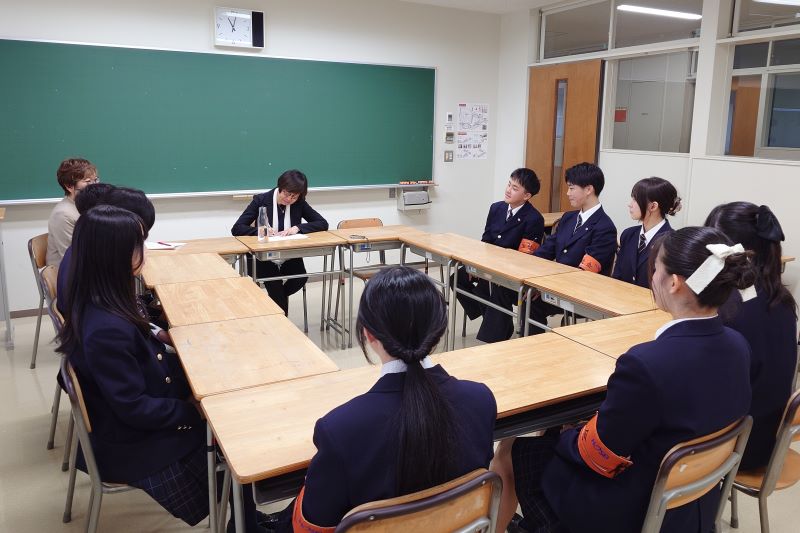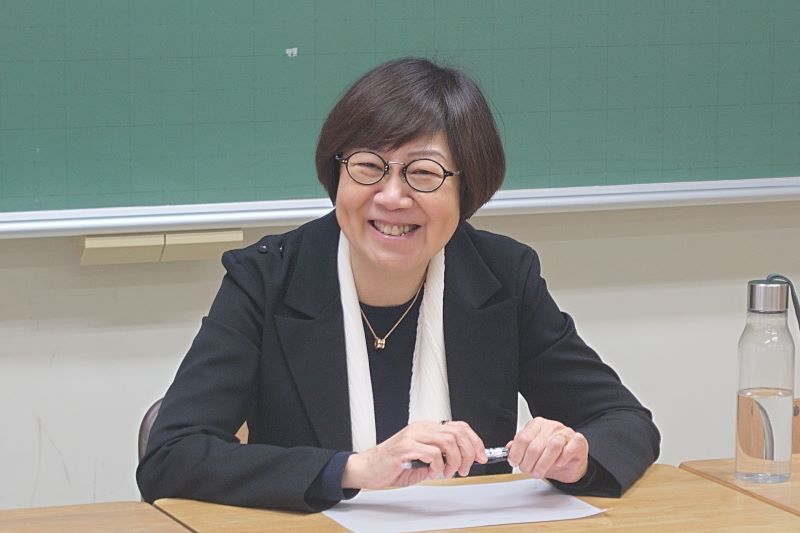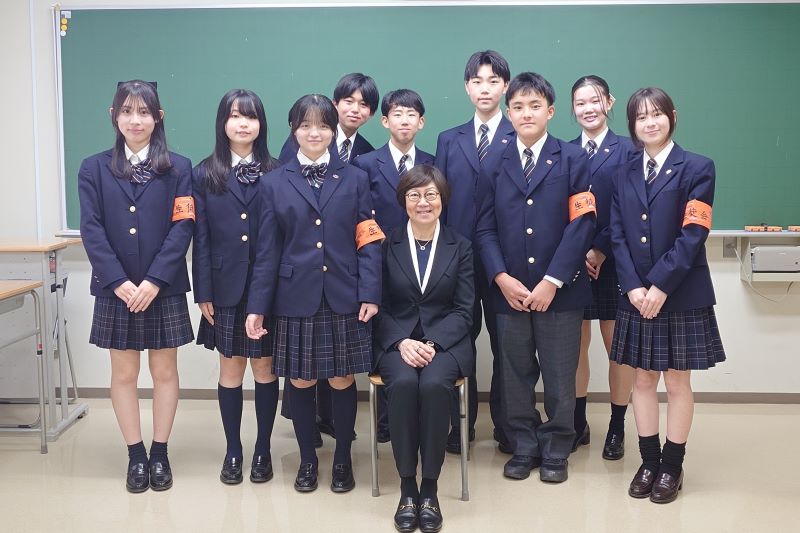
法政大学中学校生徒会の皆さん
その生徒たちは若くて、いきいきとしていて、よく笑う。それでいて、思慮深く、言葉も的確で、好奇心にあふれています。事前にしっかりと質問を用意してきてくれましたが、私のほうもいくつか質問を準備して臨みました。
質問はどれも的確で、本学の将来像から、私自身が中学生の頃に打ち込んでいたこと、さらには多様性という概念や大学入学前に身につけておくべき力に至るまで、幅広いテーマに及んでいました。
一方で、私の問いに対する答えにも、同様に印象に残るものでした。授業や部活動、中学校での生活、将来について尋ねると、その一つひとつに、しっかりとした自己理解と深い考えが感じられました。社会の仕組みや歴史の繰り返し、数学の問題に向き合い、解いていく過程、そして生徒会活動を通じて培った力をどのように生かしていくか――そうしたことに主体的に向き合う姿勢が見て取れました。
また、リーダーシップについて、そして自分がどのようなリーダーになりたいのかについても話を聞きました。学校生活が明るく楽しいものだという言葉を聞き、安心すると同時に、こうした生徒が生徒会にいる学校であれば、それも自然なことだと感じました。
Members of the Hosei University Middle School Student Association
These students are young, vibrant, and laughing… and also thoughtful, articulate, curious. They came prepared with questions for me, and I, too, had a list of questions for them.
Their questions were excellent, spanning a wide range—from my vision for Hosei University to the activities I immersed myself in as a middle school student; from the concept of diversity to the skills one should acquire before entering university, and more.
What struck me just as much were their answers. When I asked about their classes, club activities, middle school life, and their future, I was impressed by their thoughtfulness and self-understanding. They demonstrated active, inquiring minds—thinking about how society works, how history repeats itself, how math problems can be solved, and how they might apply the abilities they have cultivated through student government.
We also spoke about leadership and the kind of leaders they hope to become. It was reassuring to hear them describe their school as cheerful and enjoyable. With students like these in the student association, it is hard to imagine it being otherwise.