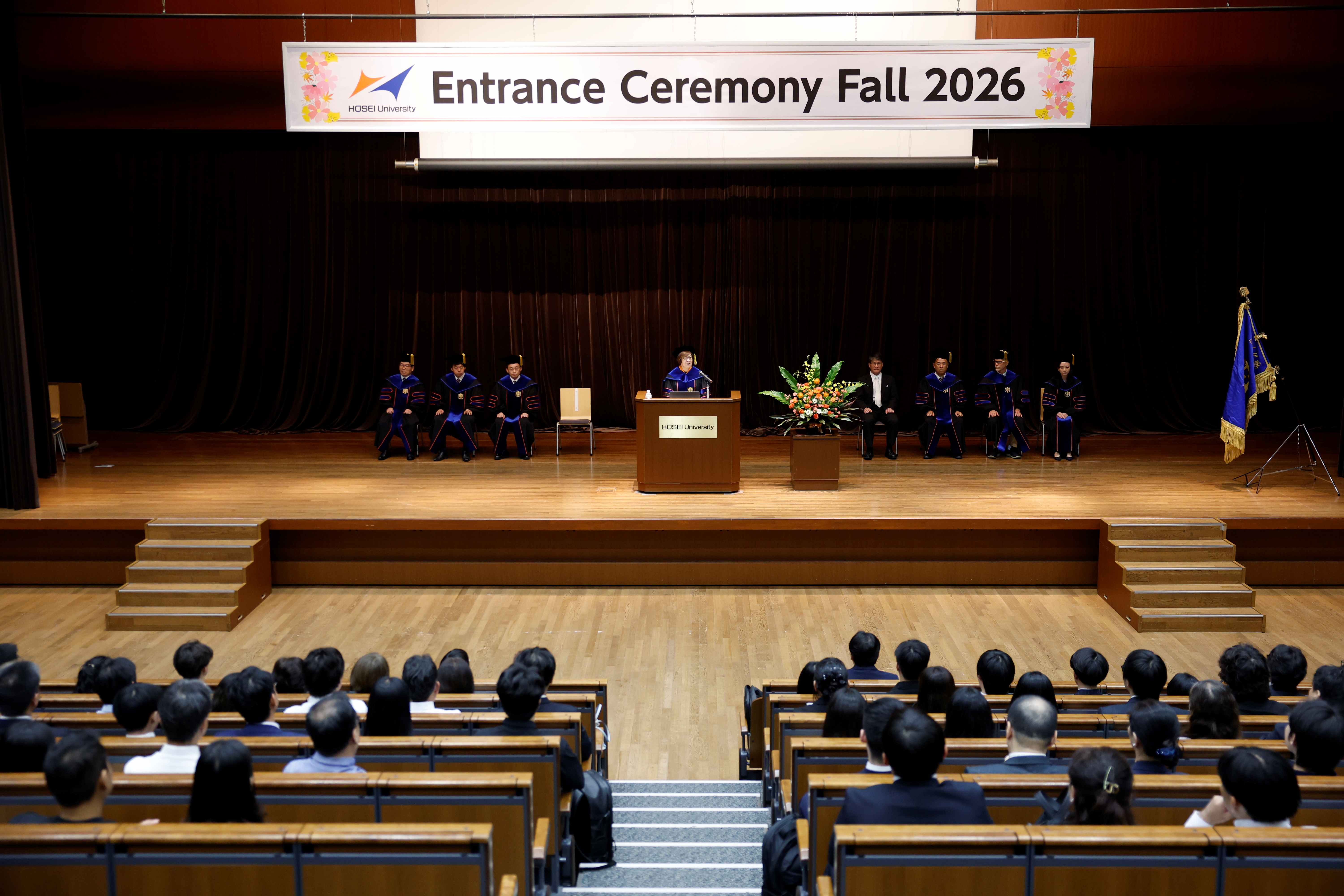
Welcome to Hosei University!
For many young people—particularly those from outside Japan—ceremonies may not be the most exciting things to attend. I can sympathize. I am also probably not, by nature, much of a ceremony person.
But we continue to hold ceremonies because they do carry meaning.
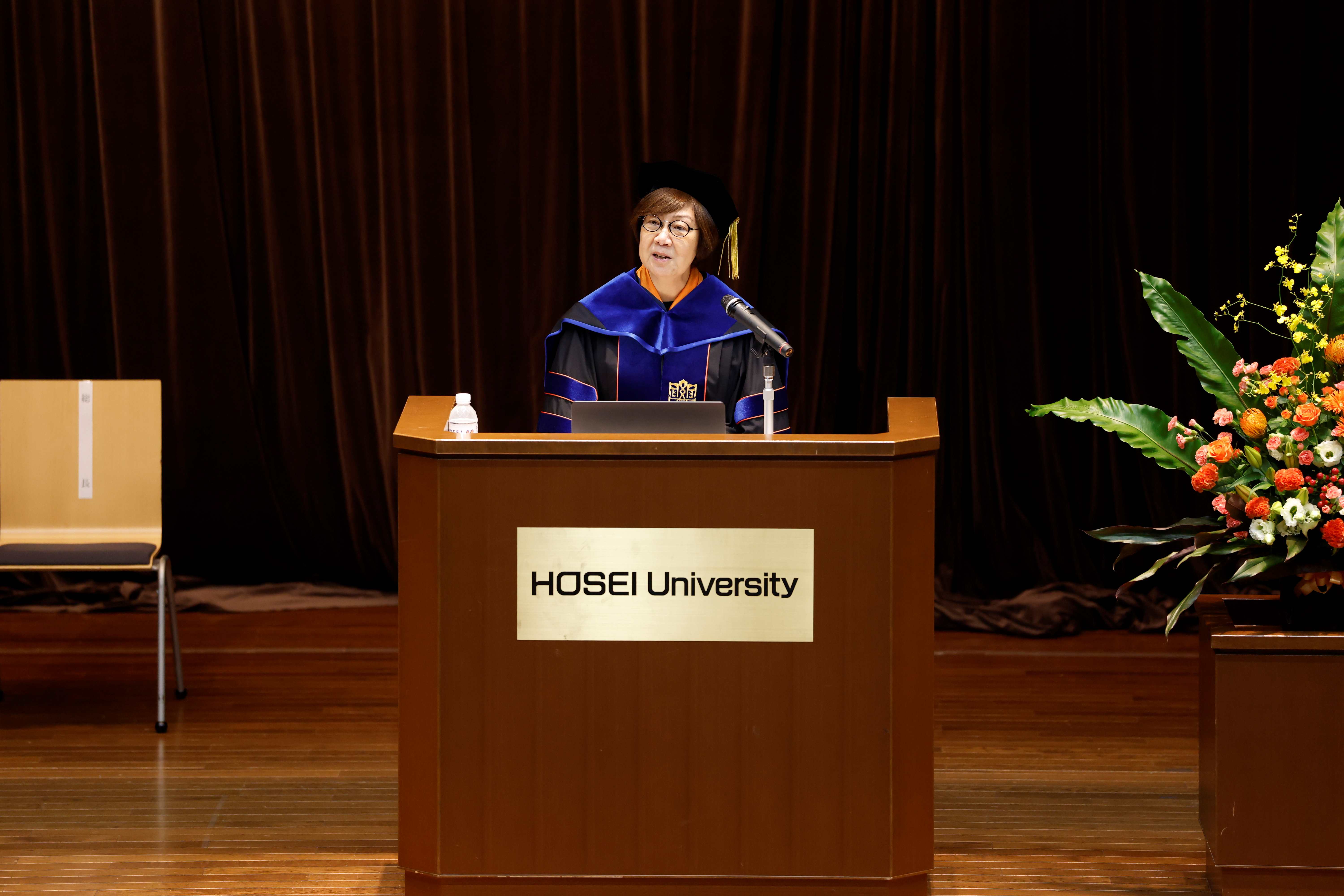
First of all, this is probably one of only two occasions when all of us will gather together like this. The other will be your graduation.
This gives you an opportunity to get a glimpse of the Hosei community—to feel, in a very tangible way, that you are not alone as you embark on this new journey. There are people around you whom you can count on when the going gets tough, and people for whom, when you can, you may in turn provide a shoulder to lean on. I hope you will draw on the support of this community as you make the most of your years at Hosei University.
This entrance ceremony also gives me the opportunity to officially welcome you to Hosei University and, as the head of this university, to share a few thoughts with you.
Since becoming President, I have had many opportunities to meet both our alumni and our current students. I often find myself learning from the wisdom they have gained through their experiences at Hosei and beyond.
Let me start with the words of one of them, film director Yoichi Narita. He said,
“Hosei University has an atmosphere that encourages students to take on challenges without fearing failure, and as a place that nourishes initiative, it stands out among Japanese universities as a place where students can truly grow.”
I think he is right. We do try to create an atmosphere that encourages students to take on challenges and to nourish initiative, and we do provide ample opportunities for students to do so.
But that is only half of the story.
The other half depends on you.
Opportunities matter only if you are willing to take that first step—to move beyond what feels comfortable, to make use of what is available to you, and sometimes to begin before you know exactly where the path will lead.
Since taking on the role of President, I have stepped into many situations that were new to me. Were there failures? Yes. Mistakes? Of course. Were there things I wish I had done differently? Definitely.
But I am still glad that I stretched myself a little, went a little further than felt comfortable, and allowed myself to venture into unfamiliar waters.
As a result, I have sometimes been able to give someone a gentle push that helped them take another step. I have been able to offer a different perspective that helped someone see an issue in a new way. I have been able to connect people who might otherwise never have met, and occasionally to help open a door that someone was already hoping to walk through.
Years ago, I read the text of a speech entitled “Coalition Politics: Turning the Century.” The author, Bernice Johnson Reagon, argued that all of us need a “room”—a “home space” where we can relax, be with people who understand us, and talk with others who see the world in ways similar to our own.
But if we remain in our room all the time, very little is going to change.
At some point, we also need to step outside—to build coalitions and connect with people who may be very different from us, but with whom we share certain goals. Change often happens not because everyone agrees on everything, but because people find enough common ground to work together.
That is one of the things I hope you will experience here at Hosei.
And there is something else I have learned since becoming President: there is much less to fear than we sometimes imagine.
At the beginning, I was nervous about many things. I remember my first major interview as President. I was not nervous about answering the questions themselves. I was nervous about what people might think of me, what they might say about me, and how they might react to what I said and what I represented.
Over time, I began to pay less attention to how I might be judged and more attention to what difference I might make. I began to ask myself not, “What will people think of me?” but, “Could something I say help someone see another possibility? Could it encourage someone to take one more step?”
Students who entered Hosei University during the past couple of years have told me, directly or indirectly—sometimes through social media, sometimes through other people—that something I said encouraged them to take on a challenge.
That makes me very happy. But I do not think it is really about the power of my words.
More likely, those students already had within them a desire to break out of their shell, to step outside their comfort zone, to try something they had not tried before, or simply to see how far they might go. Perhaps all I did was give them a gentle nudge.
Last year, after our spring entrance ceremony, a first-year undergraduate student told me that upon hearing my speech, he wanted to do something meaningful.
And he did.
During Diversity Weeks in November, he went on to organize a major event on diversity, equity and inclusion that attracted more than one hundred participants.
If I can claim any small part in that, it was only the gentle nudge.
We live in a society where we are often made to feel that we have to earn the right to do things—that we first have to prove ourselves.
But not everything has to be earned.
As rookies at the university, you have the freedom to try, to make mistakes, and sometimes to fail.
One reason I myself was able to do so much without being overly afraid of failure was precisely because I was new to the role. Being a rookie gives you a certain freedom: you do not have to know everything yet, and you are allowed to get things wrong.
It is a little like having a safety net beneath you. You can try to jump higher. You can venture onto the tightrope. You can try something you are not yet certain you can do.
And quite often, you discover that you do not fall after all.
That spirit of stepping beyond what is familiar is something I have also heard from Hosei alumni in very different walks of life.
Writer Wen Yuju has spoken about not being afraid of changing yourself. When you encounter an unfamiliar world, you may discover parts of yourself you did not know were there—and find that change exciting rather than frightening.
Model Gendai has said that, rather than regret not trying, he would rather take the leap first, and if things do not go well, keep asking why and keep going until he feels satisfied with what he has done.
And cross-border strategist Takashi Kawamoto encourages students to stretch themselves a little beyond what feels comfortable. The world, he says, is far bigger than we may imagine, and the only way to see what lies beyond is to challenge ourselves and grow.
But stretching yourself does not mean becoming someone else. Nor does stepping outside your comfort zone mean giving up the parts of yourself that matter to you.
There is, in fact, something even more fundamental than the freedom that comes with being a rookie—something you should never have to earn: the right to be who you are.
Hosei University is committed to creating a diverse, equitable and inclusive environment. There are many ways in which diversity is discussed today, but at Hosei, our commitment is grounded in our own founding principles and core values, as articulated in the Hosei University Charter and the Hosei University Statement on Diversity, both issued ten years ago.
In recent years, we have worked to give that commitment more concrete form through policies, institutional structures, and practices on our campuses. Students themselves have been an important part of that process—raising questions, proposing ideas, organizing activities, and helping us see things that the university might otherwise overlook.
At a time when we see, in different parts of the world and also here in Japan, growing intolerance toward cultural, racial, gender, sexual and other differences, Hosei University affirms diversity.
We are working to make our procedures more inclusive, to anticipate different needs rather than respond only after problems arise, and to improve our facilities and systems so that more people can participate fully in university life.
We are not there yet.
There will undoubtedly be times when we fall short of your expectations.
When that happens, tell us.
So today, as you begin your life at Hosei, I hope you will do three things.
Draw on this community when you need it.
Step outside your room from time to time, stretch yourself a little, and see what lies beyond what is already familiar.
And importantly, bring something of yourself into this university—your questions, your ideas, your experiences, and your willingness to act.
Hosei University will provide you with opportunities. Make the most of them—and in doing so, help us make Hosei an even better university.
Welcome to Hosei University. I look forward to seeing what you will do here—and to seeing how all of us, together, will continue to grow.
----
Reagon, B. J. (1983). Coalition politics: Turning the century. In B. Smith (Ed.), Home girls: A Black feminist anthology(pp. 356–368). Kitchen Table: Women of Color Press.
Step Forward Without Fear of Change
-- A New Yourself Awaits Beyond Imagination.(HOSEI ONLINE)
https://www.yomiuri.co.jp/adv/hosei/voice/post_281.php
"Just give it a try" is what moves the future forward(HOSEI ONLINE)
https://www.yomiuri.co.jp/adv/hosei/graduate/post_277.php
A cross-border career shaped by studying abroad in Boston while at Hosei University(HOSEI ONLINE)
https://www.yomiuri.co.jp/adv/hosei/voice/post_265.php
法政大学へようこそ!
特に海外から来た若い皆さんにとって、式典というのは、必ずしも一番わくわくするようなものではないかもしれません。よく分かります。私自身も、もともとあまり式典が好きなタイプではありません。
それでも私たちが式典を行うのは、やはりそこに意味があるからです。
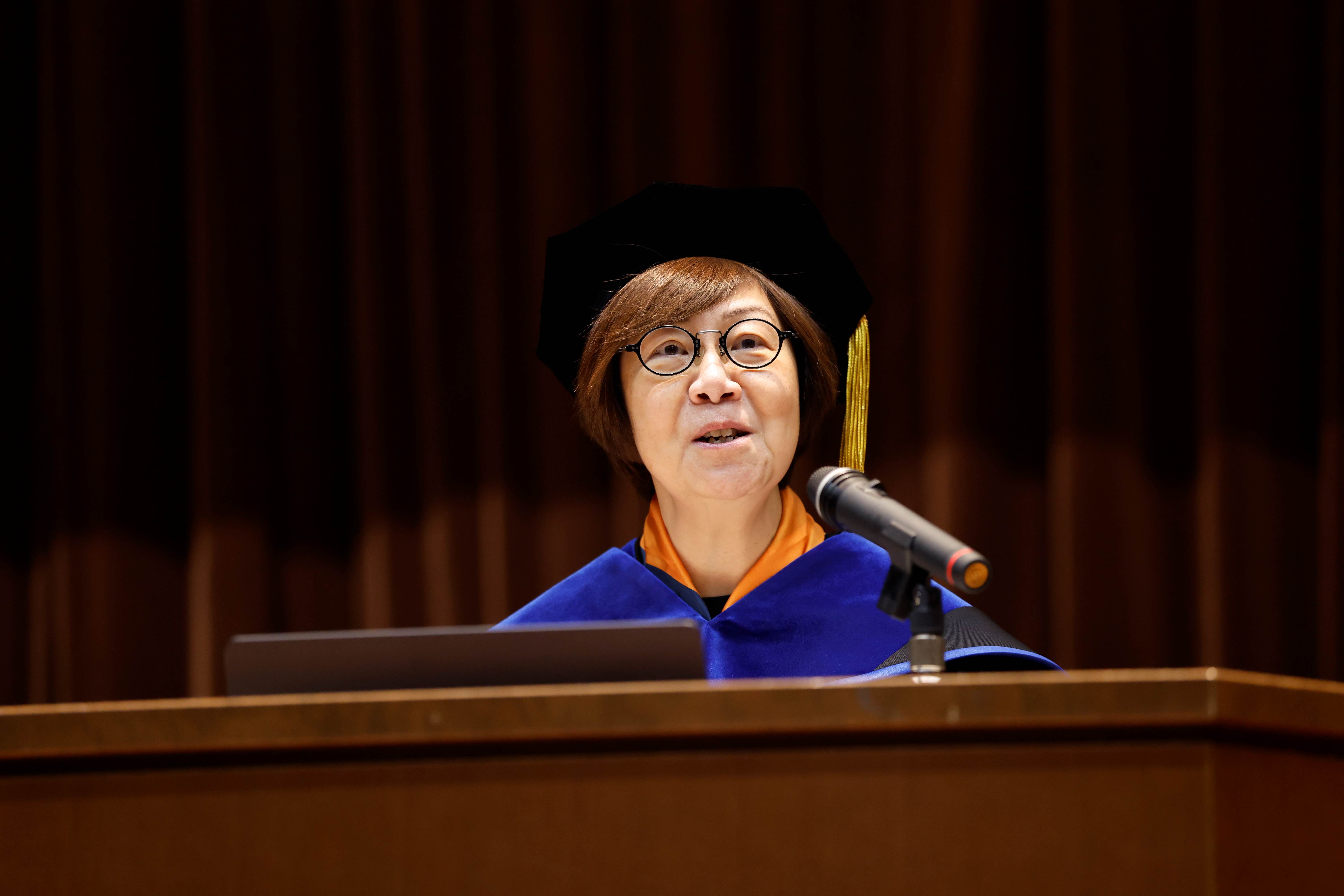
まず、こうして皆さん全員が一堂に会する機会は、おそらく二回しかありません。もう一回は、皆さんの卒業式です。
今日ここに集まることで、皆さんには、法政大学というコミュニティを少し感じてもらえると思います。これから新しい一歩を踏み出す中で、自分は一人ではないということを、実感してもらえる機会でもあります。大変なときに頼ることのできる仲間がいて、そして自分に余裕があるときには、今度は誰かを支える側になることもできます。法政大学で過ごすこれからの年月をできるだけ充実したものにするためにも、このコミュニティの力をぜひ頼ってください。
そしてこの入学式は、私にとっても、皆さんを正式に法政大学へ迎え、大学を預かる立場として、少しお話をする機会です。
総長になってから、卒業生や在学生の皆さんとお会いする機会がたくさんありました。法政大学での経験、そして卒業後の経験から生まれた言葉に、私自身、学ばされることがよくあります。
まず、その一人、映画監督の成田洋一さんの言葉をご紹介したいと思います。成田さんは、こう話しています。
「法政大学には、失敗を恐れず挑戦することを後押しする雰囲気があり、自主性を育てる場として、日本の大学の中でも、学生が本当に成長できる大学だと思います。」
私は、その通りだと思います。法政大学は、学生が挑戦できる雰囲気をつくり、自主性を育てようとしていますし、そのための機会も数多く用意しています。
ただ、それだけでは半分です。
もう半分は、皆さん自身にかかっています。
どれだけ機会があっても、自分から一歩を踏み出さなければ始まりません。少し居心地の良い場所から外に出てみる。目の前にある機会を実際に使ってみる。そして時には、この先どうなるかまだよく分からなくても、とりあえず始めてみる。そういうことも必要です。
私自身、総長になってから、それまで経験したことのないさまざまな場面に飛び込んできました。失敗はあったか。ありました。間違いはあったか。もちろんです。こうすればよかったと思うことはあったか。たくさんあります。
それでも、少し背伸びをして、自分が心地よいと思う範囲を少し越えて、知らない世界に足を踏み入れてみてよかったと思っています。その結果、誰かの背中をそっと押して、もう一歩進むきっかけをつくることができたこともあります。別の視点を示すことで、何かを少し違った視点から見るきっかけをつくれたこともあります。出会うことのなかった人同士をつないだり、誰かがすでにくぐりたいと思っていた扉をそっと開く手助けができたりしたこともありました。
ずいぶん前に、私は「Coalition Politics: Turning the Century」というスピーチ原稿を読みました。書いたのは、Bernice Johnson Reagonです。
彼女は、私たちには皆、「room」(部屋)、つまり自分の安心していられる場所が必要だと言います。そこでは安心してくつろぐことができ、自分のことを分かってくれる人たちと一緒にいて、似たような見方をする人たちと話すことができます。
でも、ずっとその「部屋」の中にいるだけでは、ほとんど何も変わりません。
どこかで、私たちは外に出る必要があります。自分とはずいぶん違う人たちともつながり、共通する目標を見つけ、連携していく。変化というのは、全員がすべてについて同じ考えになることで生じるのではなく、違いがあっても、一緒に取り組めるだけの共通点を見つけることで生まれることがあります。
法政大学で、皆さんにもぜひそういう経験をしてほしいと思います。
そしてもう一つ、総長になってから学んだことがあります。私たちが想像しているほど、恐れるものは多くないということです。
最初のころは、いろいろなことが不安でした。総長になって最初に受けた取材のことを覚えています。質問に答えること自体が緊張の理由だったわけではありません。
私が何を言うか、何を代表しているのかについて、人がどう思うだろう、何を言うだろう、どう受け止めるだろう。そういうことが気になっていました。
でも、次第に、自分がどう評価されるかよりも、自分がどんな影響を与えられるかに目を向けるようになりました。
「人は私をどう思うだろう」ではなく、「私の言葉で、誰かが別の可能性に気づくことがあるだろうか。もう一歩進んでみようと思う人がいるだろうか」と考えるようになりました。
この2年ほどの間に法政大学に入学した学生の中には、直接、あるいはSNSや人づてに、「あの言葉を聞いて、何かに挑戦してみようと思った」と伝えてくれた人がいます。
それはとても嬉しいことです。でも、私は、それが私の言葉の力だったとはあまり思っていません。
おそらく、その学生たちの中にはもともと、自分の殻を破りたい、コンフォートゾーンから出てみたい、今までやったことのないことをやってみたい、あるいは、自分がどこまで行けるのか試してみたい、という気持ちがあったのだと思います。
私がしたのは、ほんの少し背中を押しただけだったのかもしれません。
昨年の春の入学式の後、一人の新入生が、私の話を聞いて「何か意味のあることをしたいと思った」と話してくれました。
そして、本当に行動に移しました。
11月のDIVERSITY WEEKsでは、ダイバーシティ、エクイティ、インクルージョンをテーマに、100人以上が参加する大きなイベントを企画しました。
もし私にもほんの少しだけ功績を分けてもらえるとすれば、それは、その背中をそっと押したことくらいです。
私たちは、何かをするにはまずその資格を得なければならない、まず自分を証明しなければならない、と思わされることの多い社会に生きています。
でも、すべてのことが、そうではありません。
大学では、「ルーキー」であるからこそ、皆さんには挑戦し、間違え、時には失敗する自由があります。
私自身も、総長になってから、失敗を必要以上に恐れずにいろいろなことができた理由の一つは、自分がその役割ではまだ新人だったからです。
ルーキーには、ある種の自由があります。まだ全部を知っていなくてもいい。間違ってもいい。
それは、下に安全ネットが張られているようなものです。もう少し高く跳んでみてもいい。綱渡りに挑戦してみてもいい。まだ自分にできるかどうか分からないことにも、思い切って挑戦してみていいのです。
そして実際には、やってみると、案外落ちないものです。
こうした、慣れた場所から少し外へ出てみるという姿勢は、さまざまな分野で活躍している法政大学の卒業生からも聞いてきました。
作家の温又柔さんは、「自分が変わっていくことを恐れないでほしい」と話しています。「知らない世界に触れることで、自分でも気づいていなかった自分に出会うことがある。そして、その変化を怖がるのではなく、むしろ面白がってほしい」と。
モデルとして活動する源大さんは、「やらなかったことを後悔するより、まず飛び込んでみたい」と言っています。うまくいかなければ、なぜだろうと考えながら、自分が納得できるところまで続けていく。
そして、クロスボーダー経営戦略家・アドバイザーの河本孝志さんは、「学生には少し背伸びをして、今の自分が心地よいと感じる範囲を少し越えてみてほしい」と話しています。「世界は、自分が想像しているよりずっと広い。その先を見るには、自分を少し伸ばして、挑戦していくしかない」と。
ただ、少し背伸びをすることは、別の誰かになることではありません。コンフォートゾーンの外に出ることも、自分にとって大切な部分まで手放すことではありません。
そして、ルーキーであることから得られるこの自由とは別に、もっと根本的なことがあります。それは、決して自分で「獲得」しなければならないものではありません。
自分らしくある権利です。
法政大学は、ダイバーシティ、エクイティ、インクルージョンを大切にする大学であり、多様な人が学び、過ごすことのできる環境をつくることを約束しています。
今、ダイバーシティという言葉にはさまざまな意味が込められていますが、法政大学の取り組みは、流行に合わせて始めたものではありません。
その根底にあるのは、法政大学が長く大切にしてきた理念と価値です。それは、10年前に発表した法政大学憲章と法政大学ダイバーシティ宣言にもはっきりと示されています。
近年は、その考え方を、制度や組織、そしてキャンパスでの様々な取り組みを通して、より具体的な形にしてきました。その過程では、学生の皆さん自身が、疑問を投げかけ、アイデアを出し、活動を企画し、大学だけでは気づけないことを教えてくれる、大切な役割を果たしています。
世界のさまざまな場所で、そして日本でも、文化、人種、ジェンダー、セクシュアリティなどの違いに対する不寛容さが強まる今、法政大学は、多様性を肯定します。
そして、手続きや制度をより利用しやすいものにすること、問題が起きてから対応するのではなく、さまざまなニーズをあらかじめ考えること、より多くの人が大学生活に十分に参加できるよう、施設や仕組みを整えることに取り組んでいます。
まだ十分ではありません。
皆さんの期待に応えられないことも、きっとあると思います。
そのときは、私たちに伝えてください。
最後に、今日から法政大学での生活を始める皆さんに、3つのことを伝えたいと思います。
必要なときには、このコミュニティを頼ってください。
時には自分の「部屋」から外に出て、少し背伸びをして、今すでに知っている世界の先に何があるのかを見てみてください。
そして何より、自分自身の何かを、この大学に持ってきてください。皆さんの問い、アイデア、経験、そして行動しようとする気持ちです。
法政大学は、皆さんにさまざまな機会を提供します。ぜひそれを最大限に活かしてください。そして、そのことを通して、法政大学をさらに良い大学にしていくことにも力を貸してください。
改めて、法政大学へようこそ。
皆さんがここで何をしていくのか、そして皆さんとともに、私たち自身もどのように成長していくのか、楽しみにしています。
----
Reagon, B. J. (1983). Coalition politics: Turning the century. In B. Smith (Ed.), Home girls: A Black feminist anthology(pp. 356–368). Kitchen Table: Women of Color Press.
変化を恐れずに一歩踏み出そう
その先にはきっと、想像以上の自分がいる(HOSEI ONLINE)
https://www.yomiuri.co.jp/adv/hosei/voice/post_281.php
「とりあえずやってみる」が未来を動かす(HOSEI ONLINE)
https://www.yomiuri.co.jp/adv/hosei/graduate/post_277.php
法政時代のボストン留学が導いた
「クロスボーダー」のキャリア(HOSEI ONLINE)
https://www.yomiuri.co.jp/adv/hosei/voice/post_265.php