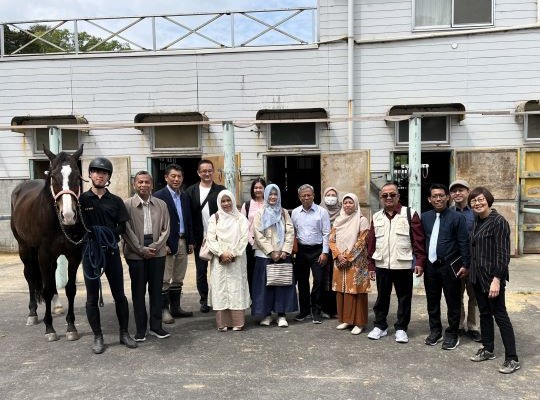
UMYの訪問団と城山地区馬場の皆さん
青々とした新緑が道の両脇に広がる中を進んでいくと、ゆったりと歩き、ときおり草を食む馬たちのいる場所にたどり着きました。仕事の一週間の始まりとしては、なかなか良いスタートです。
目的地は、城山地区にある馬場。
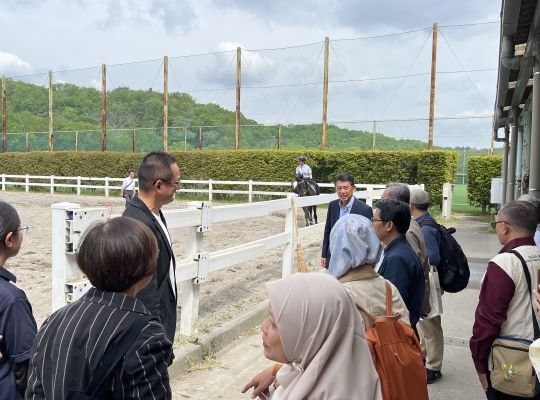
今回の目的は、インドネシアのUMY(Universitas Muhammadiyah Yogyakarta、ムハマディア大学ジョグジャカルタ校)からの訪問団との面会で、人馬のウェルビーイング研究所による国際プロジェクト(現代福祉学部の佐野先生がリーダー)の一環として行われたものです。当日は、スポーツ健康学部の高見先生をはじめ、馬術部のコーチングスタッフや学生の皆さんから、馬たちが関わるさまざまな活動についてご説明いただきました。
大学の訪問団と馬場でお会いするというのは珍しいことですが、美しい馬たちに囲まれたこの穏やかな環境は、大学の取り組みやDEIへの姿勢、そして福祉、環境、地域社会、産業など多様な分野における馬とともに行う活動の可能性について、率直で和やかな意見交換を行うのに最適な場となりました。
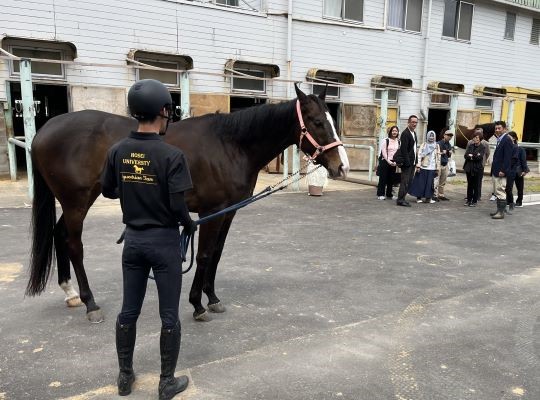
ここにいる馬の多くは引退競走馬で、中には名前や血統に見覚えのある馬もいました。引退後は、馬術部の学生たちの丁寧な世話のもとで「第二の馬生」を送っています。競走馬としての役割を終えた後に再調教を受け、現在は学生アスリートとともにトレーニングに取り組むだけでなく、障がいのある方々のためのセラピー馬としての活躍も目指しています。
ジョグジャカルタでは、馬が人々の生活に深く根付いており、交通手段や観光にも用いられている点が印象的でした。一方で、馬の福祉に配慮しながら、教育・研究・社会貢献と結びつけていく本学の取り組みは、訪問団の皆さんにとっても大変関心の高いものだったように感じます。
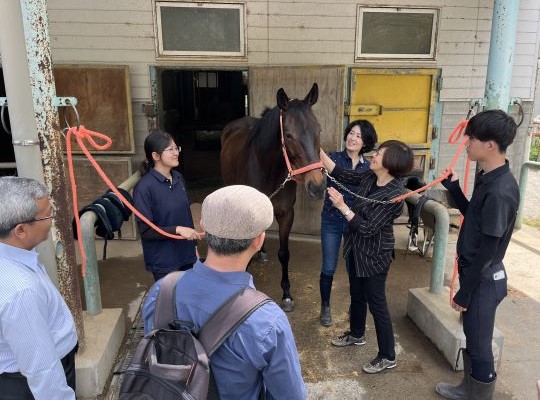
人馬のウェルビーイング研究所を中心とした学内の連携や、そこに関わる教員・学生・コーチングスタッフの皆さんの取り組みの可能性を垣間見ることができ、大変印象深い時間となりました。そして何より、見学するだけでなく、実際に馬に触れ、ブラッシングをさせてもらう貴重な機会をいただけたことに、心から感謝しています。
The UMY Delegation and the Team at the Shiroyama Stables
Walking through rows of lush, vibrant new greenery lining the road, I arrived at a destination where horses strolled leisurely, pausing now and then to graze… Not a bad start at all to a week of work.
The destination? The horse stables in the Shiroyama area.
The purpose? To meet with a delegation from UMY (Universitas Muhammadiyah Yogyakarta) in Indonesia, as part of an international project of the Institute of Human-Horse Well-being, led by Professor Ryuhei Sano of the Faculty of Social Policy and Administration. Professor Takami of the Faculty of Sports and Health Studies, along with the coaching staff and students of the equestrian club, was also there to explain the activities the horses are involved in.
It is quite rare to meet university delegates at a stable, but the idyllic setting—the beautiful horses, of course, being at its heart—created an ideal atmosphere for open and friendly discussions about our universities, our commitment to DEI, and the possibilities of equine-assisted activities in areas such as social welfare, the environment, local communities, industry, and beyond.
Most of the horses are retired racehorses—I even recognized the names of some of them and their parents—and they are now living their second lives here, under the attentive care of the students of the Equestrian Club. After being retrained to adapt to life beyond racing, they partner with our equestrian athletes in training and aim to serve as therapy horses for people with disabilities.
I learned that horses are deeply woven into everyday life in Yogyakarta, where they are used for transportation and tourism. The ways in which we work with horses—ensuring their well-being while connecting this work to education, research, and social engagement—seemed particularly compelling to our visitors.
I came away with a glimpse of the promise of the initiatives under the auspices of the Institute of Human-Horse Well-Being and its collaborators across campus, as well as deep appreciation for the team that has made all of this possible—professors, students, and coaching staff alike. I left not only impressed, but also grateful for the opportunity not just to observe, but to stroke and brush these beautiful horses myself.