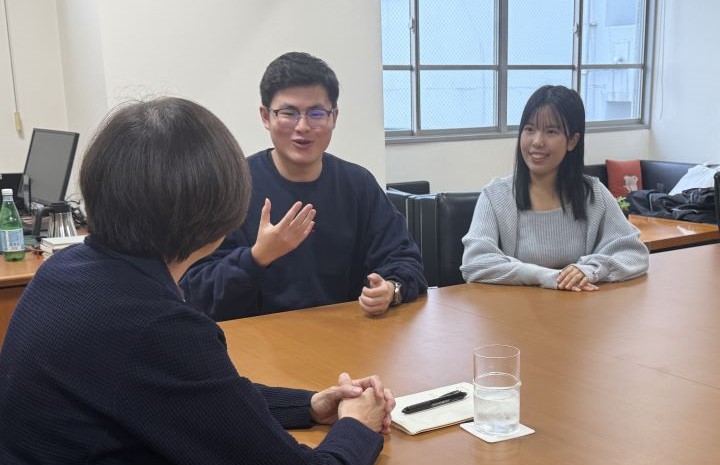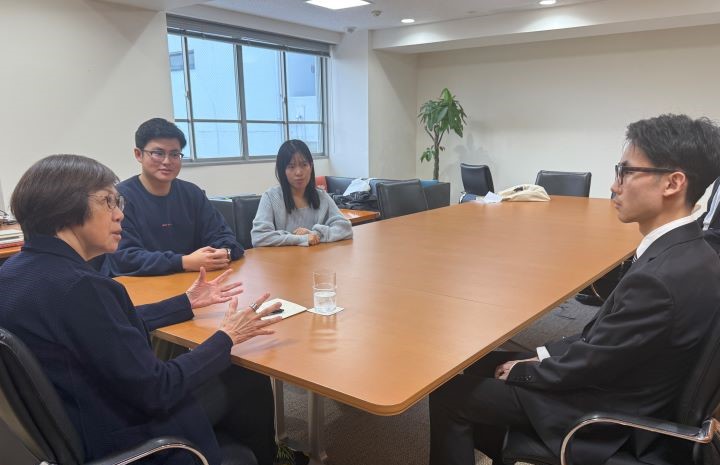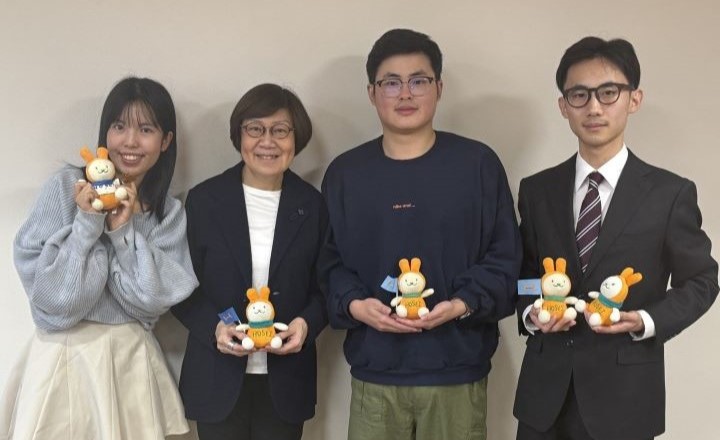
留学生会の学生たち
10人しかいない留学生会、何百人もいる留学生会と規模はさまざまで、前・現・次期会長の性格も異なりますが、共通しているのは、留学生をサポートしたいという思い、国籍や文化の違いを越えて交流を促したいという姿勢、そして自分自身も楽しみながら活動しているという点です。言語や食べ物、祝日、人との付き合い方などが異なる国へ、一人で留学のために来ることは、間違いなく大きな勇気を要します。 友達をうまく作れない留学生も一定数いますが、そんな中で、優しい先輩や仲間がいることがどれほど心強いか、想像に難くありません。助け合いの精神はこの3名の学生に確かにあり、それを超えて、これから入学してくる皆が充実した学生生活を送れるように取り組んでいる姿が、とても印象的でした。
大学生活についての話題は、部活から勉強まで幅広く広がりました。2つのキャンパスをまたいで、まったく異なる分野を学んでいるそうですが、勉強の楽しさ、教授と直接幅広い話ができること、多様な学生がいることなど、法政大学に入ってよかったという思いを聞かせていただきました。懇談の終盤には、私に質問をする時間が設けられ、多くの良い質問をいただきました。私がどのような大学を作っていきたいのか、法政大学の実力をどのように伝えていきたいのか、さらには「大学とは何か」という本質的な問いにまで及びました。
話の中で、「間主観性」という言葉も出てきました。私自身、大学・大学院時代によくこの概念について議論したことを思い出しました。私も含め、中国文化圏というつながりがありながらも文化の異なる4人が、ひとときではありますが、「間主観性」を共につくり出せた時間だったのかもしれません。
Students of the international students associations
Whether the association consists of only ten members or several hundred, and despite the different personalities of the past, present, and incoming presidents, there is something that remains the same: a sincere desire to support international students, a commitment to bringing people together beyond differences in nationality and culture, and an attitude of enjoying the work itself.
Coming alone to a country where the language, food, holidays, and everyday ways of interacting are different undoubtedly takes courage. Some international students struggle to make friends, and in such moments, the presence of kind seniors and supportive peers can make a world of difference. Among these three students, a strong spirit of mutual support was clearly felt. Even more impressive was their dedication to creating an environment in which future students, too, will be able to enjoy a rich and fulfilling university life.
The conversation about university life unfolded naturally, ranging from extracurricular activities to academic experiences. Although the three students study in completely different fields across two campuses, they spoke warmly about the pleasure of learning, the opportunity to engage directly and widely with professors, and the richness that diversity brings to student life. All shared a sense that they were glad to have chosen Hosei University.
Toward the end of the meeting, time was set aside for questions, and many thoughtful ones were raised—about the kind of university that should be built, how the strengths of Hosei University might be better shared, and even about what a university truly means.
In the course of the discussion, the word “intersubjectivity” also came up. It brought back memories of many such conversations during earlier university and graduate school days. The four participants, myself included, shared a connection through “the broader Chinese cultural sphere”, but our cultural backgrounds differed. In that brief moment, collaboratively, we may have created a certain “intersubjectivity”.