アスレティックトレーナーを目指す学生たち
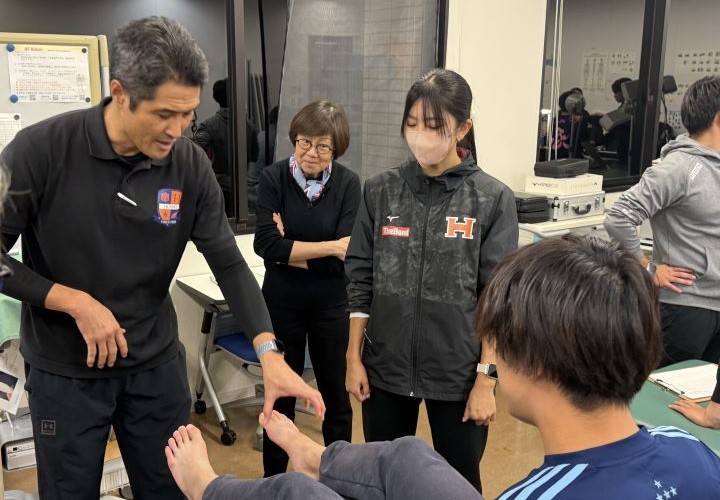
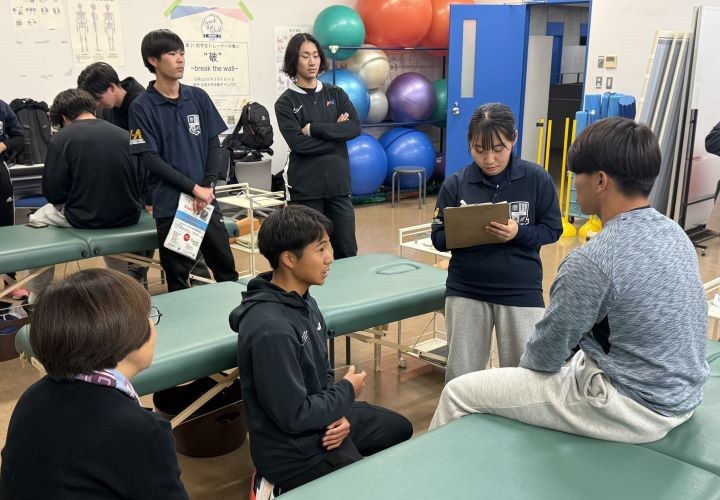
トレーニング、筋肉のこわばり、怪我といったことは私にとってなじみ深いものですが、AT(アスレティックトレーナー)実習の学生たちの活動の様子を目にして、自身の経験を新たな視点から捉え直すことができました。学生たちはペアを組み、専門職としての意識をもって互いにサポートし合いながら、治療を受けに来たアスリートに対して、必要な情報を聞き取るだけでなく、リラックスしてもらうための雑談も交えて対応していました。教員は各グループの様子を丁寧に見守り、最終的な評価や必要に応じた処置を行いながらも、学生たちが自ら考え、行動する余地を大切にしていました。
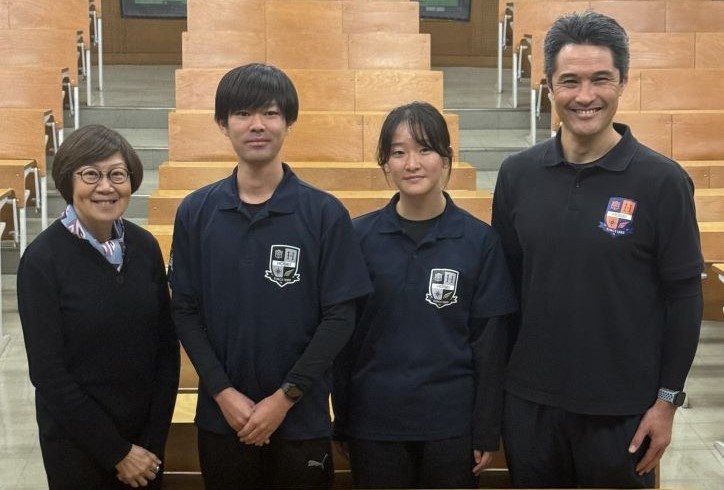
その後、学部3年生と修士2年生の学生と話す中で、「仲間」という言葉が何度も印象的に使われていました。また、事務職員の方からは、体育会に所属する学生、趣味でスポーツを楽しむ学生、トレーナーを志す学生たちが同じ学びの場で共に学んでいるという話をうかがいました。学部長による教室や施設の案内を通して、ピア・ラーニングを中核とする活気に満ちた「学習コミュニティ」がどのように形づくられているのかを、鮮やかに思い描くことができました。
ATコースの学生の多くは元アスリートであったり、現在もスポーツに積極的に関わっていたりします。こうした役割の垣根を越えた交流は、個々の経験を豊かにし、学びをより深いものにしています。この環境の根底には、主体性と相互支援を重んじる姿勢があります。社会におけるスポーツの持続的な重要性に加え、高齢化社会において運動機能や生活の質を維持するための「トレーニング」の重要性が高まっていることを考えると、このようなダイナミックな学習コミュニティの意義はいっそう際立っています。
Athletic trainers-to-be
Training, stiff muscles, and injuries are all familiar to me, but observing the AT students in action allowed me to reconsider my own experiences from a new perspective. They work in pairs, assisting one another in a professional manner, speaking with athletes coming in for treatment, not only to gather essential information but also engaging in small talk to help them relax. The professor closely monitored each group, offered final assessments, and provided treatment when necessary, while still giving the students space to think and act independently.
In a later conversation with a third-year undergraduate student and a second-year master’s student, the word “comrades” (仲間) came up repeatedly. An administrative staff member also explained that varsity athletes, recreational sports players, and aspiring trainers all study together in the department. The tour of the various classrooms and facilities, led by the dean, helped me vividly envision how a vibrant ‘learning community’ is formed, with peer learning at its core.
Many of the AT students are former athletes or remain actively involved in sports. This crossing of boundaries between roles enriches individual experience and deepens learning. Central to this environment is a strong emphasis on self-initiative and mutual support. The enduring significance of sport in society, along with the growing importance of “training” for maintaining mobility and quality of life in an aging population, underscores the value of this dynamic learning community.