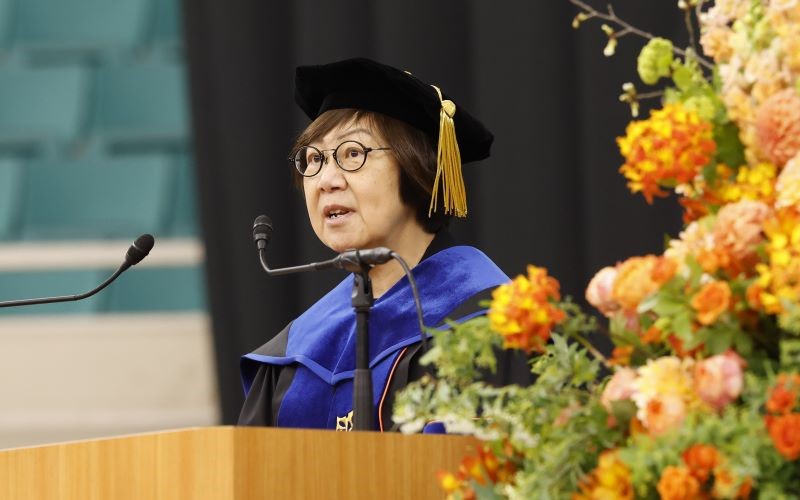
ご卒業、おめでとうございます。
英語圏での経験から申し上げると、英語には「卒業式」を意味する言葉が複数あります。Congregation、convocation、そしてcommencementです。congregationやconvocationは、卒業と同じように、大切な節目にたどり着いたことを祝い、これまでの努力をたたえる意味があります。一方、commencementには少し違った意味があります。これは「始まり」を表す言葉です。仕事や人生の新しいステージへの第一歩を踏み出すことを意味します。
本日ここ武道館で、私たちは皆さんの歩みの一区切りと、これからの新たな出発を祝っています。
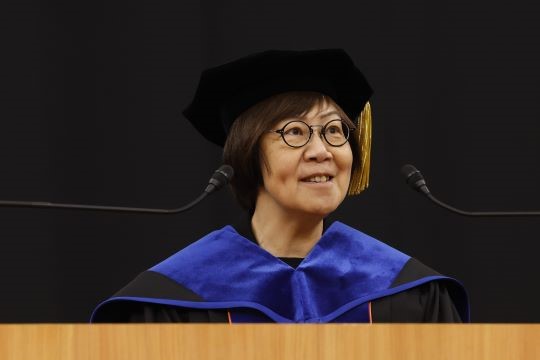
まずは、法政大学で過ごした年月を少し振り返ってみてください。授業で読んだ数えきれないほどの文献、数々のプレゼンテーション、書き上げたレポートや論文、出席した講義。そして、親しい友人だけでなく、自分とは異なる背景や考え方をもつ人たちと交わした活発な議論。取り組んだ研究、長い時間を費やした考察、そのために必要だった粘り強さ。そして何よりも、苦しいときも楽しいときも支え合った友人との出会いを思い出してください。
この年月と、その中での自分の成長を、ぜひかみしめてください。ぎりぎりでゴールにたどり着いた人も、すばらしい成績を収めた人も、皆さんは確かな一歩を成し遂げました。この人生の一段階を、しっかりと終えたのです。ここまで支えてくれた方々への感謝の気持ちも、どうか忘れないでください。
同時に、今日は皆さんのcommencement、新しい章の始まりでもあります。
修士号や博士号を取得される皆さんは、これまでの研究が次の道につながっている方も多いでしょう。マーケティング、ファイナンス、ブランディング、起業などの知識をビジネスの世界で生かす人もいれば、社会学などの分野で研究を続ける人もいるでしょう。
では、社会言語学を学び、商社に就職する人はどうでしょう。国際関係論や環境問題を学び、航空会社で働く人、あるいは、文学部を卒業してシステムエンジニアになる人はどうでしょう。
こうした状況は決して特別なことではありません。大学教育は職業訓練ではなく、特定の職業のためだけに準備をする場ではないからです。大学は、皆さんの知的な土台を育てる場所なのです。私自身、大学院まで十年以上社会学を学びましたが、最初の仕事はここ法政大学で英語のライティングを教えることでした。
大学で得たものは、知識だけではありません。読むこと、調べること、書くこと、議論すること、考え続けること。その積み重ねの中で、皆さんは考え方や人との向き合い方も身につけました。異なる文化への理解、冷静な判断力、問題を解決する力、伝える力、協力する力。これらはどの分野でも重視される力です。教室や研究室だけでなく、サークル活動、教員や仲間との交流、フィールドワーク、留学など、さまざまな経験の中で育まれました。
最後に、教職員を代表して、そして皆さんの先輩の一人として、四つのメッセージをお伝えします。
第一に、学び続けてください。
専攻に関係する分野に進む人も、まったく違う道に進む人も、最初は皆「ルーキー」です。そして、ルーキーであることは、実は特権です。新しいことに挑戦できる。合わなければ方向を変えることもできる。失敗してもいい。助けを求めてもいい。その自由があるからこそ、成長できます。ルーキーでいられる時間は一度きりです。どうか大切にしてください。
最近は「リスキリング」という言葉がよく使われます。もちろん新しい技術や知識を身につけることは大切です。けれど、学びはそれだけではありません。止めたり再開したりするものではなく、静かに続いていくものです。皆さんの学びは今日で終わりではありません。形を変えながら続いていきます。
第二に、どんな仕事に就いても、責任をもって取り組んでください。
私の最初の仕事は英語のライティングの授業でした。正直、長年社会学を学んだあとの道として思い描いていたものとは少し違っていました。それでも、私は初めての給料をもらう前に、アカデミック・ライティングの教科書を何冊も買って準備を重ね、授業には常に全力で向き合いました。
その結果、教え子たちは留学し、世界で活躍し、自分の子どもたちにも広い視野を伝えています。すぐに結果が出なくても、努力は決して無駄にはなりません。皆さんの行動は、いつか誰かに良い影響を与えるかもしれません。
第三に、決めつけないこと。しかし、自分の見解は持つこと。
これから、価値観や信念、経験や背景が大きく異なる人たちと出会うでしょう。心を開いてください。急いで結論を出さないでください。よく話を聞き、事実や根拠を丁寧に確かめてください。そして十分に考えたうえで、自分の立場を示してください。広い心と批判的な思考は、どちらも大切です。
第四に、皆さんには社会を変える力があります。自分が望む変化そのものになってください。
今の世界は、進歩よりも後退が目につくかもしれません。しかし、歴史を振り返れば、確かな前進もあります。法政大学では、1933年に女性が聴講生として受け入れられ、翌年には一部の学部で正式な入学が認められました。今日の卒業生の約四割は女性です。百年前には想像もできなかったことでしょう。
私が今日アカデミック・ガウンとキャップを身に着けているのも、その意味を込めてです。学位服は中世ヨーロッパの教会の伝統に由来します。階層や権威の象徴だと批判されることもありますし、決して着心地の良いものでもありません。
しかし同時に、かつて高等教育から排除されていた女性たちは、こうした衣装を身に着けることもできませんでした。だからこそ、この装いは排除の象徴であると同時に、その壁を越えてきた証でもあります。
私の恩師であり、歴史とフェミニズムの研究者でもある先生は、さまざまな背景を理解したうえで、それでも式典ではあえて学位服を着るのだと語っていました。それは、かつて閉ざされていた場所に女性が確かにいることを示すためであり、私たちがどれほど前進してきたかを示すためだと。私も同じ思いで、今日この装いを選びました。多様性、公平性、包摂に向けた歩みの一つのしるしとして。
法政大学は、DEI――Diversity (多様性)、Equity (公平性)Inclusion(包摂性)への取り組みで広く知られています。しかし、この姿勢は最近始まったものではありません。知の自由を重んじ、社会に向き合い、より良い世界を築こうとしてきた法政の伝統そのものです。
法政大学の卒業生として、皆さんにも変化を生み出す力があります。身近な場所でも、社会の中でも。その力をどう生かすかは、皆さん自身の選択にかかっています。法政の精神を胸に、自由に考え、誠実に行動し、より公正で包摂的な社会を目指してください。人生は一直線に決まっているものではありません。その方向は、皆さんの選択と価値観、そして一歩を踏み出す勇気によって形づくられていきます。
このスピーチを準備する際、昨年の入学式で行ったように最後に英語でまとめを加えるのか、それともすべて英語で話すのかと聞かれました。正直に言えば、そのほうが私にとっては楽です。しかし、楽な道を選ぶことは私のやり方ではありません。
それでも最後に、英語でメッセージを残します。あえて訳しません。この内容を理解すること、そして実行することが、法政大学から皆さんへの最後の宿題です。
Continue to learn.
Do not be judgmental, but take a stance grounded in facts and evidence.
Be the change you want to see in the world.
Carry the Hosei spirit forward.
法政大学の卒業生として、自分自身を誇りに思ってください。大胆に挑戦してください。より良い社会をつくってください。
あらためて、ご卒業おめでとうございます。皆さんの新しい始まりを、心から応援しています。
Congratulations on your graduation.
From my experience in the English-speaking world, what we call “graduation” is known by several other names: congregation, convocation, and commencement. Congregation and convocation, like graduation, mark the completion of an important stage and celebrate your achievements. Commencement, however, carries a slightly different meaning. It signifies a beginning—the moment you set out toward the next stage of your professional life.
Today, here in Budokan, we gather to celebrate both: your completion and your new beginning.
First, I invite you to pause and reflect on your years at Hosei University. Think of the countless readings you pored over, the presentations you delivered, the many papers you wrote, the lectures you attended, and the lively discussions you shared—not only with close friends but with people whose backgrounds and perspectives differed from your own. Recall the research you conducted, the long days spent interpreting your findings, and the perseverance it all required. And, of course, remember the friendships you formed—especially those who stood by you through thick and thin.
Savor these years and your accomplishments. Whether you barely crossed the finish line or graduated with flying colors, you have achieved something significant: you have completed this stage of your life. Take time to thank those who supported you along the way.
At the same time, we celebrate your commencement—your step forward into a new chapter.
For those earning master’s or doctoral degrees, your studies often connect directly to what comes next. Some of you will apply your knowledge of marketing, finance, branding, or entrepreneurship in the business world. Others will continue your work in sociology or related fields through further research. What about those who studied sociolinguistics and are now joining trading companies? Those with backgrounds in international relations or environmental studies who will work for airlines? Or literature majors beginning careers as systems engineers?
Such situations are not unusual at all. A university education is not job training. We do not prepare you for one specific profession. Rather, we cultivate your intellectual foundation. I myself studied sociology for more than a decade through graduate school, yet my first position was teaching English writing here at Hosei University.
Your education has never been only about acquiring knowledge. Through years of reading, research, writing, discussion, and reflection, you have also developed ways of thinking and ways of being: cultural sensitivity, sound judgment, problem-solving skills, communication abilities, and teamwork. These qualities are valued in every field. You gained them not only in classrooms and laboratories, but also through club activities, exchanges with peers and faculty, fieldwork, and study abroad experiences.
Allow me to share four final messages with you, as a representative of the faculty and staff who have guided and supported you, and perhaps also as your senpai.
First: continue to learn.
Whether you enter a field related to your major or something entirely different, you begin again as a rookie. And being a rookie is a privilege. You have the freedom to try new things. If something does not suit you, you may change direction. You are allowed to fail. You are allowed to ask for help. That freedom encourages challenge and growth. You will only be a rookie once—cherish that time.
Recently, the term “reskilling” has become popular in media and corporate settings. Of course, acquiring new skills and knowledge is important. But learning is broader than that. It is not something you stop and restart; it is a continuous process. Your education does not end today. It evolves.
Second: whatever job you take on and whichever path you choose, carry it out with responsibility.
My first job—teaching English writing—was not what I had envisioned after more than a decade of studying sociology in a competitive academic environment. Yet the very first thing I did, even before receiving my first paycheck, was to buy a textbook on academic writing. I prepared thoroughly for my classes, and gave my best to teaching. As a result, my students went on to study abroad, build global careers, and convey a broader worldview with their own children. Nothing you do is ever wasted. Even if results are not immediate, your efforts can have a positive impact on others.
Third: do not be judgmental—but do make judgments.
You will meet people whose values, beliefs, experiences, and backgrounds differ greatly from your own. Be open-minded. Do not rush to conclusions. Listen carefully. Examine facts and evidence thoughtfully. And then, after careful consideration, take a stance. Openness and critical thinking must go hand in hand.
Fourth: you can make a difference. Be the change you wish to see in the world.
The world today may feel chaotic. Yet history shows us that progress is possible. Consider this: among today’s graduates, approximately forty percent are women. One hundred years ago, that would have been unimaginable. At Hosei University, women were first admitted as special students in 1933, and from 1934 they were officially allowed to enroll in selected departments. Today, women make up about forty percent of the students graduating today. This was unimaginable 100 years ago.
It is partly for this reason that I wear this academic cap and gown today. Academic dress has its origins in medieval European church traditions. It has been criticized as a symbol of hierarchy, elitism, and institutional authority. It is not the most comfortable attire, either.
Yet at the same time, it represents something else as well. Historically, when women were excluded from higher education, they were also excluded from wearing these garments. The cap and gown thus became symbols not only of authority, but also of exclusion.
A mentor of mine—a distinguished scholar of history and feminism—once told me that despite these complexities, she continues to wear the cap and gown at university ceremonies. She does so to affirm the presence of women in spaces from which they were once excluded, and to demonstrate how far we have come. In the same spirit, I wear this attire today as a sign of progress toward diversity, equity, and inclusion.
Hosei University is widely recognized for its commitment to DEI. But this commitment is not new; it is deeply connected to what makes Hosei distinctive. At its foundation lies a spirit of intellectual freedom, critical engagement with society, and a sense of mission to build a better world—respecting diversity, fairness, and inclusion.
As Hosei graduates, you too possess the power to create change—within your immediate surroundings and in society at large. With that power comes responsibility. Carry the Hosei spirit with you: think freely, act with integrity, and remain committed to building a more just and inclusive society. Life is not a single straight path laid out before you; the direction it takes will be shaped by the choices you make, the values you uphold, and the courage with which you move forward.
When preparing this speech, I was asked whether I would provide a summary in English, as I did at last year’s entrance ceremony, or deliver it entirely in English. I was tempted—it would have been easier for me. But choosing the easier path has never been my policy. Still, I will leave you with one final message in English. I will not translate it. Understanding it—and living it—will be your last assignment from Hosei University:
Continue to learn.
Do not be judgmental, but take a stance grounded in facts and evidence.
Be the change you want to see in the world.
Carry the Hosei spirit forward.
Take pride in being a graduate of Hosei University. Boldly take on challenges. Create a better society. We are cheering for you.
Once again, congratulations on your graduation—and our very best wishes for your commencement.