

Researchers investigate how Escherichia coli and Bifidobacterium, two non-dominant gut bacteria, communicate and coordinate metabolism
The stability of the human gut microbiome relies on interactions between different bacterial species. However, the specific molecular mechanisms of these interactions, particularly among non-dominant species, remain largely unexplored. In a new study, a research team from Hosei University, Japan, has discovered such an interaction, in which Escherichia coli detects metabolites from Bifidobacterium through a special sensory mechanism, forming a non-dominant communication network. This finding helps explain how gut microbiome diversity is maintained.
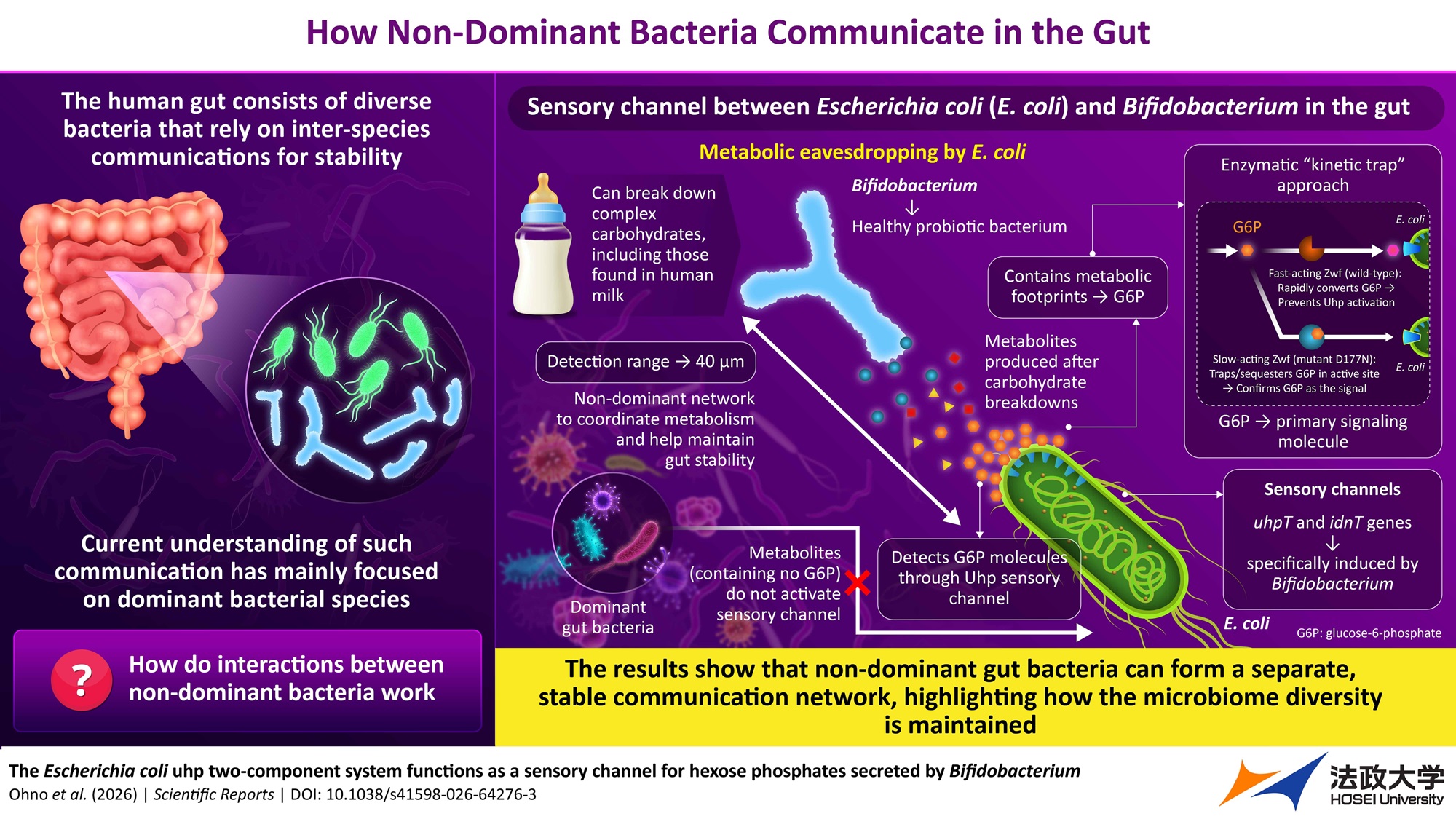
Title: Metabolic eavesdropping by Escherichia coli on Bifidobacterium
Caption: Escherichia coli detects specific molecules within the metabolites released by Bifidobacterium as chemical footprints. This creates a specific communication network that supports the stability and survival of the two species in the human gut microbiome.
Credit: Professor Kaneyoshi Yamamoto from Hosei University, Japan
License type: Original content
Usage restrictions: Cannot be reused without permission.
Our gut contains a microscopic world called the gut microbiome, teeming with hundreds of bacterial species and trillions of bacteria. These microorganisms influence many aspects of our health, including digestion, and assist with numerous functions in the body. Gut bacteria compete for the limited nutrients available in their environment, while also interacting with each other in ways that can influence the stability of the microbial community.
However, previous research has mainly focused on which bacteria are present and in what numbers, while the specific molecular mechanisms underlying their interaction and communication have largely remained a mystery. Moreover, research on gut microbiota dynamics has also often focused on dominant bacterial groups, leaving interactions between less abundant species relatively unexplored. The persistence of these non-dominant bacteria suggests that they may participate in specialized metabolic interactions that help them occupy specific niches.
To explore this question, a research team led by Professor Kaneyoshi Yamamoto from the Department of Frontier Bioscience and Research Institute of Micro-Nano Technology, Hosei University, Japan, investigated the interaction between Escherichia coli (E. coli) and Bifidobacterium, two non-dominant bacterial groups that reside in our gut. “Traditionally, gut research has mostly focused on discovering the different species of bacteria in our gut. We were, however, fascinated by the social life of these bacteria,” explains Prof. Yamamoto. “We focused on E. coli and Bifidobacterium, which are two minority species in our gut. In this study, we have discovered a new mechanism through which one bacterium detects the metabolic activity of the other.” Their findings were published in Volume 16 of the journal Scientific Reports on August 25, 2026.
Bifidobacterium species are good gut bacteria, known for their ability to break down complex carbohydrates such as human milk oligosaccharides (HMO). During this process, they release various metabolic byproducts into their surrounding environment. The researchers discovered that E. coli can detect specific molecules among these products using specialized sensory systems. In this way, E. coli can obtain information about the metabolic activity of a neighboring bacterium from the chemical footprints it leaves behind and prepare its own metabolism accordingly. The authors termed this phenomenon as “metabolic eavesdropping.”
To identify these sensory pathways, the researchers screened 54 different transport systems corresponding to 61 carbon sources utilized by E. coli. They found that it uses the Uhp and Idn sensory systems to monitor a complex cocktail of metabolic footprints released by Bifidobacterium. The Uhp system, especially, is a well-known two-component system dedicated to the sensing and transport of a special class of molecules, called hexose phosphates, particularly glucose-6-phosphate (G6P).
To further understand this interaction, the researchers focused on the Uhp system of E. coli. Experiments revealed that the Uhp system was only activated by metabolites released by Bifidobacterium and not by Bacteroides species, which dominate the gut microbiome. This suggests that the hexose phosphates, including G6P, that trigger the Uhp system are not simply universal byproducts of bacterial metabolism, but are specifically released by Bifidobacterium.
To confirm G6P as the main sensing molecule in the Bifidobacterium-derived metabolites, the researchers then employed an innovative kinetic trapping method. They treated Bifidobacterium-conditioned medium with both a fast-acting form of the enzyme G6P dehydrogenase and a slower-acting variant of the same enzyme. The fast-acting enzyme essentially metabolized G6P signals, significantly decreasing Uhp sensory activity compared to the slow-acting enzyme, providing strong evidence that G6P is the primary sensing molecule. The researchers also found that Bifidobacterium consistently releases G6P while metabolizing different sugars, indicating that it as a universal signal associated with Bifidobacterium metabolism.
Notably, the researchers suggest that since the G6P signal is short-lived, this communication can only happen if the two bacterial species live close to each other within 40 µm “spatial hub.” This means that non-dominant bacteria in the gut might not live in isolation, but may form spatial hubs where different species interact using specific molecular links. Such non-dominant networks could help explain how diverse bacterial species coexist within the gut and contribute to the stability and resilience of the gut microbiome.
“Our results reveal a new model for microbiome regulation in the gut that contributes to the stabilization of the gut environment,” notes Prof. Yamamoto. Looking ahead, he says, “This research could help with the development of next-generation probiotics designed to enhance beneficial microbial interactions. In addition, this could help with the development of targeted gut therapies, potentially allowing harmful bacteria to be suppressed while minimizing disruption to healthy gut flora.”
By identifying the hidden interactions that shape the gut microbiome, this study could pave the way for the development of specialized gut therapies for different diseases that can enhance health and quality of life for all.
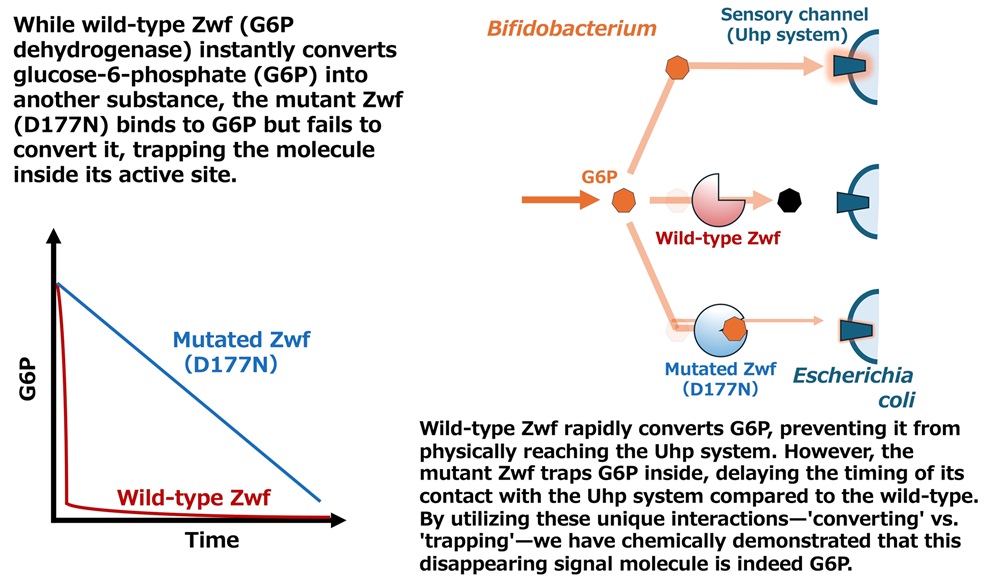
Title: Innovative kinetic trap approach
Caption: By converting glucose-6-phosphate (G6P) signals using a fast acting wild-type enzyme, and trapping them using a slow-acting mutant enzyme, the researchers confirmed G6P as the primary sensing molecule.
Credit: Professor Kaneyoshi Yamamoto from Hosei University, Japan
License type: Original content
Usage restrictions: Cannot be reused without permission.
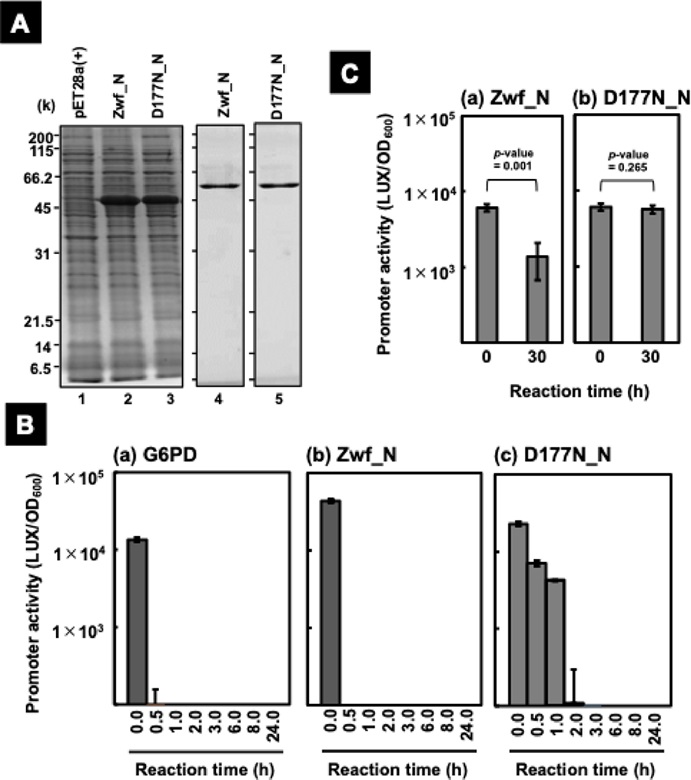
Title: Identification of primary sensing molecule in Bifidobacterium supernatant using kinetic trap approach
Caption: The researchers used a kinetic trap approach using a fast-acting glucose-6-phosphate (G6P) enzyme and a slow-acting variant, providing strong evidence that G6P is the primary sensing molecule in Bifidobacterium metabolites that triggers the Uhp system in Escherichia coli.
Credit: Prof. Kaneyoshi Yamamoto from Hosei University
Source link: https://www.nature.com/articles/s41598-026-64276-3
License type: CC BY 4.0
Usage restrictions: Credit must be given to the creator.
Reference
Authors:Tomotsugu Ohno1, Masato Hoshino1, Tsubasa Niino1, Masanori Tamura1, Miho Yoshimura1, and Kaneyoshi Yamamoto1
Title of original paper:The Escherichia coli uhp two-component system functions as a sensory channel for hexose phosphates secreted by Bifidobacterium
Journal:Scientific Reports
DOI:10.1038/s41598-026-64276-3
Affiliations:1Department of Frontier Bioscience and Research Institute of Micro-Nano Technology, Hosei University, Japan
About Hosei University, Japan
Hosei University is one of the leading private universities in Tokyo, Japan. It offers international courses in many disciplines and has a long and rich history. Founded as a school of Law in 1880, Hosei University evolved into a private university by 1920. The university is also home to multiple research centers that conduct advanced research in various fields, including nanotechnology, sustainability, ecology, and more. The university has three main campuses—Ichigaya, Tama, and Koganei—located across Tokyo.
For more information, please see: https://www.hosei.ac.jp/
About Professor Kaneyoshi Yamamoto from Hosei University, Japan
Dr. Kaneyoshi Yamamoto is currently a Professor in the Department of Frontier Bioscience and Research Institute of Micro-Nano Technology at Hosei University. He obtained his Ph.D. from Kindai University in 2001. His research interests include genome biology, applied microbiology, and molecular biology. He has published over 90 research articles that have received more than 4,900 citations to date.
Funding information
This work was supported by a Grant-in-Aid for Scientific Research (C) [20K05795 and 23K04998] from MEXT.
Media contact
Professor Kaneyoshi Yamamoto
Department of Frontier Bioscience and Research Institute of Micro-Nano Technology, Hosei University, Japan
E-mail: kanyamam@hosei.ac.jp
Affiliation: Office of the President Public Relations Section, Hosei University, Japan
E-mail: pr@adm.hosei.ac.jp